Dice Games for Kids That Take Two Minutes to Learn
Dice games matched to age, why they are naturally fair across an age gap, and what children learn without noticing.
Two dice and a scrap of paper will occupy two children for longer than most things you can buy them.
Dice games for kids work because the randomness does the balancing. A six-year-old and a ten-year-old can play the same game without anyone adjusting anything, which is true of almost nothing else.
Key takeaways
- Dice games are naturally fair across ages, because luck does not care how old you are.
- The best ones add one decision to the roll — that is what makes them a game rather than a coin toss.
- Push-your-luck games teach risk assessment without ever mentioning it.
- Keep rounds under two minutes so a loss is quickly followed by another go.
- Play on a tray or a towel. Dice on a hard table end up under the sofa.
What makes a dice game good
A pure dice race — roll, move, repeat — is not really a game. Nobody makes a decision, so nobody can play well or badly.
Snakes and ladders is the obvious example. It is a perfectly good way to teach turn-taking to a four-year-old and offers nothing whatever to anyone older.
The good ones add a single choice on top of the roll: whether to stop, which number to keep, where to place a result. That one decision is where all the interest lives.

Push-your-luck games
Pig
The simplest good dice game there is. Roll one die repeatedly, adding to a running total. Bank your points whenever you choose — but roll a one and you lose everything gained that turn. First to 100 wins.
Every roll poses the same question: is what I have worth risking for a bit more? Children work out surprisingly quickly that greed loses more often than caution.
Skunk
The same idea with two dice, played by a whole group at once. Everyone stands, and anyone who wants to bank sits down. A one ends the round for everyone still standing.
It works brilliantly with large groups, because the decision is visible: you can see who is brave and who is not.

Going to Boston
Roll three dice, keep the highest, then re-roll the remaining two and keep the highest again. Roll the last one and add all three. Highest total wins the round.
It teaches a genuinely useful habit: recognising which result is worth keeping before you know what comes next.
Games for younger children
Below about six, the arithmetic gets in the way. These use the dice as a counting tool instead.
- Roll and Cover. Draw a grid of numbers; roll and cross one off. First to clear a row wins.
- Beetle. Each number builds one body part. Pure luck, but the drawing is the fun.
- Race to Twenty. Roll and count on. The first past twenty wins.
- Match the Spots. Roll and find that many objects in the room.
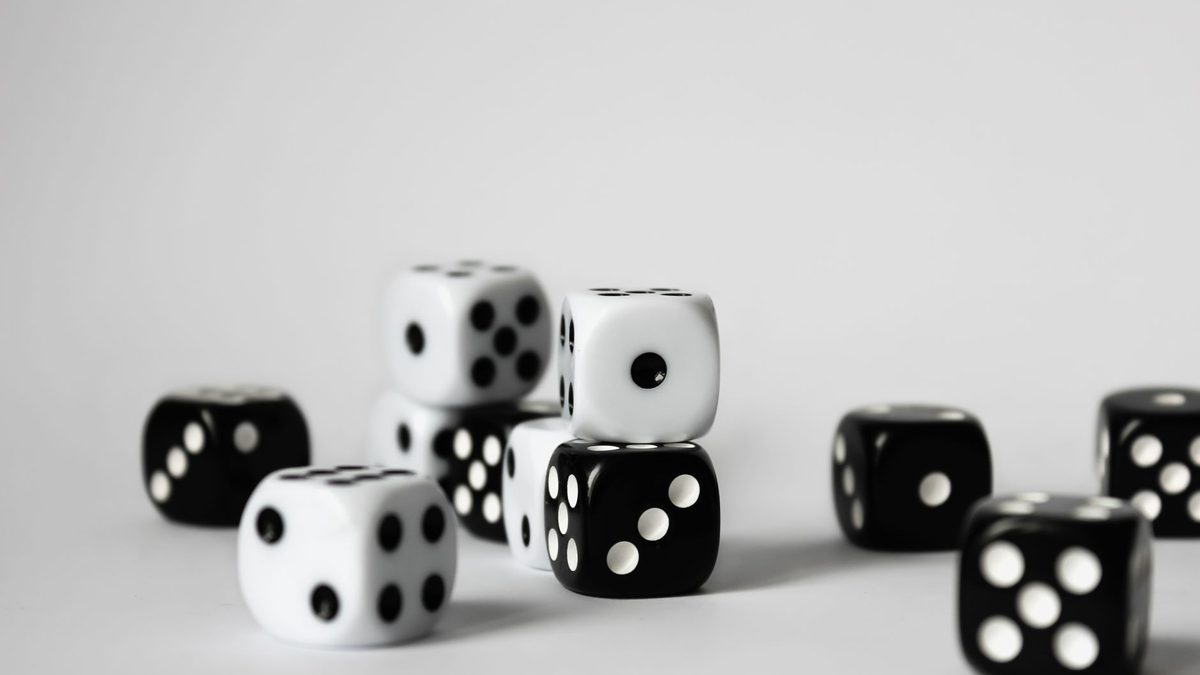
Recognising a dice pattern without counting is a genuine early-maths skill, and it develops on its own through play. More of this kind of thing is in math games for kids.
Comparing the options
| Game | Dice | Ages | Players | Round length | Skill |
|---|---|---|---|---|---|
| Roll and Cover | 1 | 4–6 | 2–4 | 5 min | Number recognition |
| Beetle | 1 | 4–7 | 2–6 | 5 min | None — pure luck |
| Pig | 1 | 7–12 | 2–4 | 2 min | Risk assessment |
| Skunk | 2 | 7–12 | Any number | 2 min | Risk assessment |
| Going to Boston | 3 | 7–11 | 2–4 | 5 min | Some choice |
| Shut the Box | 2 | 8–13 | 2–4 | 5 min | Real strategy |
| Yahtzee-style | 5 | 9–14 | 2–6 | 20 min | Real strategy |
Swipe the table sideways to see every column.
Why they work for mixed ages
This is the practical reason dice games survive family occasions.

A skill game between a seven-year-old and a twelve-year-old needs handicapping or it is a demonstration. A dice game does not, because the randomness swamps the skill gap. The youngest player genuinely can win, and everyone knows the win was real.
Our guide to games for children of different ages covers when handicaps are needed and when the game handles it for you.
The teaching that happens anyway
Nobody should announce that a dice game is educational. It plainly is, though.
- Addition, constantly. Two dice, hundreds of times an evening.
- Probability intuition. Seven turns up more than twelve, and children notice.
- Expected value. Banking in Pig is exactly this decision.
- Losing gracefully. Short rounds make a loss survivable.
The probability side is worth drawing out once children are old enough — how to teach probability to kids covers the predict-and-tally method. Institutions such as the Royal Institution use much the same hands-on approach.
Practical notes

- Roll into a tray or a lid. This solves ninety per cent of dice problems.
- Buy larger dice for small hands. Standard dice are fiddly below about six.
- Agree what a cocked die means before it happens, not after.
- Keep spares. Dice are lost, not broken.

Dice have one real weakness: they roll away, which makes them poor travel companions. Anything that delivers a random number without escaping is better on a bus or a tray table — which is the practical argument for a duel decided by rolling a pencil, and why travel games for kids leaves dice at home.
Frequently asked questions
What are the best dice games for kids?
Pig and Skunk are the best all-round choices from about age seven, because each roll poses a real decision. Roll and Cover and Beetle suit younger children, and Shut the Box adds genuine strategy for older ones.
How do you play Pig?
Roll one die repeatedly, adding each result to a running total for that turn. You may bank the total at any point, but rolling a one loses everything gained that turn. The first player to reach 100 banked points wins.
Why are dice games good for mixed ages?
Because randomness swamps the skill gap. A skill-based game between a seven and a twelve-year-old needs handicapping to be fair, whereas a dice game does not: the youngest player can genuinely win, and everyone knows the win was real.
What do children learn from dice games?
Repeated addition, number recognition, probability intuition and risk assessment. Deciding whether to bank points in Pig is an expected-value judgement, made hundreds of times an evening without anyone naming the concept.
What age can children start playing dice games?
From around four using dice as a counting tool, in games like Roll and Cover or Beetle. Games requiring addition and decisions, such as Pig, generally suit seven and above. Larger dice are easier for small hands.
How do you stop dice rolling off the table?
Roll into a shallow tray, a box lid or onto a folded towel. This solves most dice problems at once, keeps the noise down and prevents the search under the furniture that ends many otherwise good games.