How to Teach Probability to Kids
Teach probability with predict, tally and compare — language first, one coin next, and fractions much later than you think.

Probability is the one part of school maths where children arrive with strong opinions already formed, and most of them are wrong.
That makes teaching probability different from teaching arithmetic. You are not filling a gap; you are dislodging something the child already believes.
They believe a coin that landed heads four times is “due” a tail. They believe their lucky number comes up more often. Those beliefs are not corrected by explanation. They are corrected by evidence the child collected themselves.
Key takeaways
- Teach it as predict, then test, then compare — the gap between the two is the whole lesson.
- Start with language, not numbers: certain, likely, unlikely, impossible.
- One coin is enough for the first several sessions. Do not rush to two dice.
- The gambler’s fallacy appears on its own; plan to address it directly.
- Small samples mislead, and discovering that is more valuable than any formula.
Start with words, not fractions
Before any number appears, children need a vocabulary for uncertainty. Four words carry most of it: certain, likely, unlikely, impossible.
Sort everyday statements into those four buckets. The sun will rise tomorrow. It will snow this afternoon. You will grow wings.
This works from about age five and costs nothing at all.

Arguments will break out over the middle two categories, and that is the useful part. “Likely” is genuinely fuzzy, and noticing that is the first real probabilistic thought.
The core method: predict, tally, compare
Every activity below follows the same three steps, and the order matters.
- Predict. Write down what you think will happen, before anything is thrown or rolled.
- Tally. Run the experiment enough times for a pattern to appear, recording as you go.
- Compare. Put the prediction beside the result and discuss the difference.
Skipping the written prediction ruins it. Children reliably remember having predicted whatever actually happened.
Starting with one coin
Ask which is more likely, heads or tails. Almost everyone says they are the same, which is correct and unearned.
Now flip it ten times and tally. The result is frequently something like 7–3, and the room gets interesting. Ask whether that means the coin is unfair.

Then combine the whole class’s results. Thirty children flipping ten times each produces three hundred flips, and the total lands far closer to even than any individual set did.
That single exercise teaches the most useful idea in the topic: small samples are unreliable, and larger ones settle down.
Moving to two dice
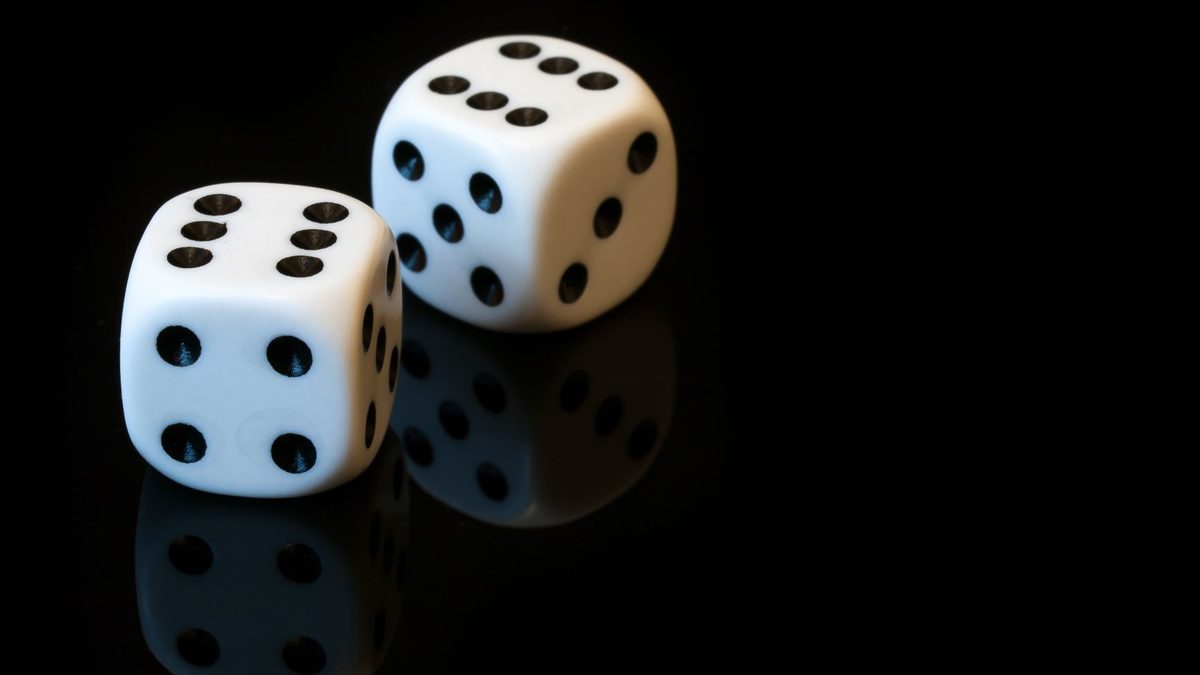
One die is uniform and therefore slightly boring. Two dice are where probability gets genuinely interesting, because the totals are not equally likely.
Ask which total will come up most often. Most children guess a high number, or their favourite. Then roll fifty times and tally the totals.
| Total | Combinations | Ways | Chance |
|---|---|---|---|
| 2 | 1+1 | 1 | 1 in 36 |
| 3 | 1+2, 2+1 | 2 | 2 in 36 |
| 5 | 1+4, 2+3, 3+2, 4+1 | 4 | 4 in 36 |
| 7 | 1+6, 2+5, 3+4, 4+3, 5+2, 6+1 | 6 | 6 in 36 |
| 9 | 3+6, 4+5, 5+4, 6+3 | 4 | 4 in 36 |
| 11 | 5+6, 6+5 | 2 | 2 in 36 |
| 12 | 6+6 | 1 | 1 in 36 |
Swipe the table sideways to see every column.
Have them list the combinations themselves rather than presenting the table. The discovery is the point, and it takes about ten minutes.
The fallacy you must address
Sooner or later a child will say the coin is “due” a tail. This is the gambler’s fallacy, and it will not go away unless you name it.
The correction is one sentence: the coin has no memory. Every flip is a fresh, independent event, and the previous four are irrelevant to the fifth.
It helps to be honest that the intuition is understandable. Over many flips the proportion really does even out — but that happens by being diluted by later results, not by the coin compensating.
Recording results well

| Age | Activity | Concept | Equipment |
|---|---|---|---|
| 5–6 | Sorting statements | Certain, likely, unlikely, impossible | None |
| 6–7 | Coin flips and tally | Prediction versus result | One coin |
| 7–9 | Pooling class results | Small samples mislead | One coin each |
| 9–11 | Two-dice totals | Not all outcomes are equal | Two dice |
| 10–12 | Listing combinations | Counting outcomes | Paper |
| 11–13 | Risk games | Expected value | Dice |
Swipe the table sideways to see every column.
Where it shows up outside maths
Weather forecasts are the most accessible example. A forty per cent chance of rain does not mean the forecast was wrong when it stayed dry, and unpicking that is a genuinely useful life skill.

Games help here because the stakes are visible. Any game where you choose between a reliable option and a risky one is a decision about distributions — which is exactly what choosing between a steady pencil and a high-variance one amounts to.
Short games are the easiest place to practise this, because a run of results arrives quickly enough to discuss while the prediction is still fresh — something our guide to games for children of different ages covers from a fairness angle.
For game-based practice, see math games for kids that do not feel like homework. Classroom approaches to probability teaching are published by the NCETM.
Frequently asked questions
How do you teach probability to children?
Use predict, tally, compare. Have the child write a prediction first, run the experiment enough times for a pattern to appear, then compare the two. Start with the language of certain, likely, unlikely and impossible before introducing any numbers.
At what age can children learn probability?
Sorting statements into certain, likely, unlikely and impossible works from around age five. Coin experiments suit six and up, and reasoning about why some dice totals are more common than others usually suits nine and above.
Why is seven the most common total on two dice?
Because there are six ways to make it — 1+6, 2+5, 3+4, 4+3, 5+2 and 6+1 — while there is only one way to make 2 or 12. With 36 equally likely combinations, seven comes up six times in 36 rolls on average.
What is the gambler’s fallacy and how do you explain it?
It is the belief that a coin landing heads repeatedly is “due” a tail. The correction is that the coin has no memory: each flip is independent, and previous results have no influence. Proportions even out over many flips by dilution, not by compensation.
How many trials do children need to see a pattern?
Ten flips is enough to show that results are surprising, but not enough to show the underlying pattern. Pooling a whole class’s results, giving several hundred trials, demonstrates far more convincingly that small samples are unreliable.
Do you need special equipment to teach probability?
No. A single coin covers the first several sessions, two ordinary dice cover most of the rest, and the language activities need nothing at all. Paper for recording tallies is the only other requirement.