Cursive Writing for Kids: When Joining Actually Helps
When a child is ready to join letters, which joins to teach first, and the print habits that must be secure before cursive starts.
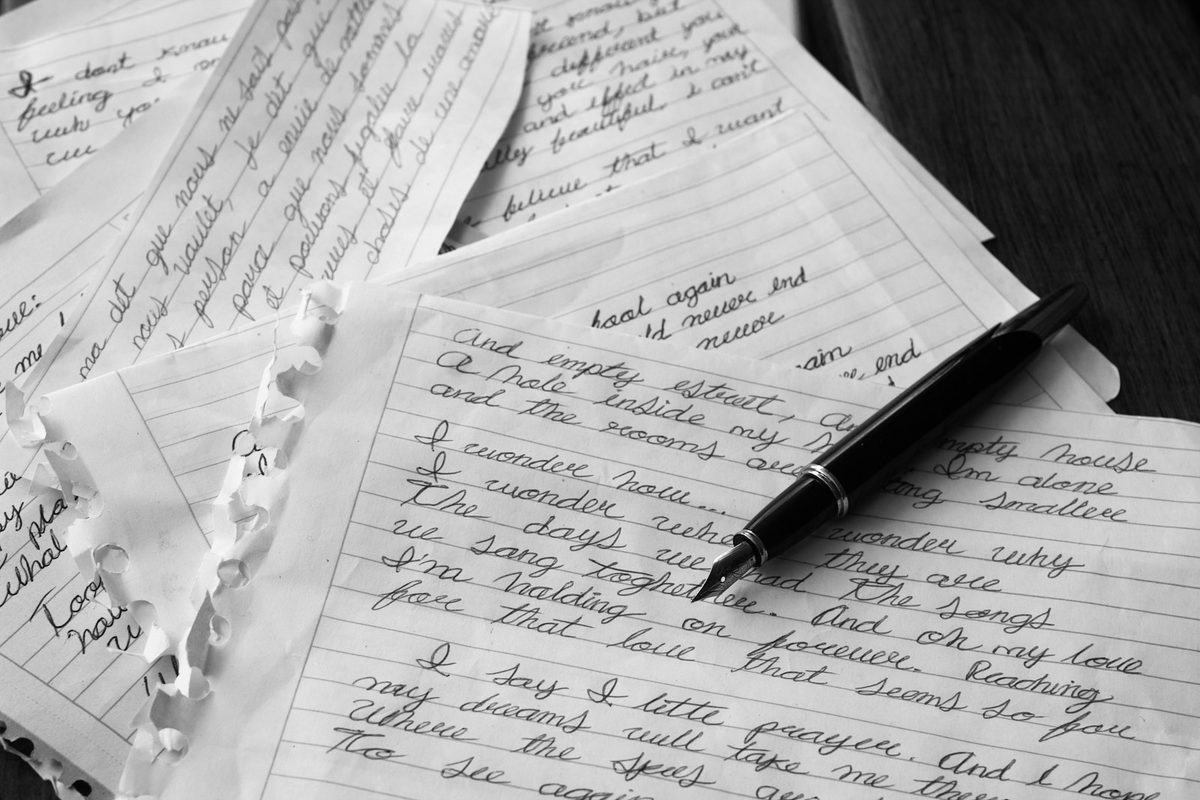
Few parts of primary education generate as much disagreement as joined-up writing. Some schools teach it from the first term, others delay it for years, and a few have quietly dropped it.
The disagreement is mostly about timing rather than value. Joining helps — but only once the underlying letter shapes are automatic.
Introduced too early, cursive writing for kids turns a child who could form letters into one who can no longer form anything reliably.
Key takeaways
- Join only when print letters are automatic, usually around six or seven.
- Correct starting points matter more than neatness at every stage.
- Teach joins in families, not alphabetically.
- Four letters — b, g, j, y — are the usual sticking points.
- The measurable benefit is speed and stamina, not beauty.
What has to be secure first
Joining is a change to how letters connect, not to how they are shaped. If the shapes are still uncertain, joining makes the uncertainty permanent.
Three things should be reliable before any join is introduced.
- Correct formation. Every letter started at the right point and moving in the right direction.
- Consistent size. Letters sitting on the line with ascenders and descenders roughly right.
- Comfortable endurance. The child can write for ten minutes without pain or a collapsing grip.
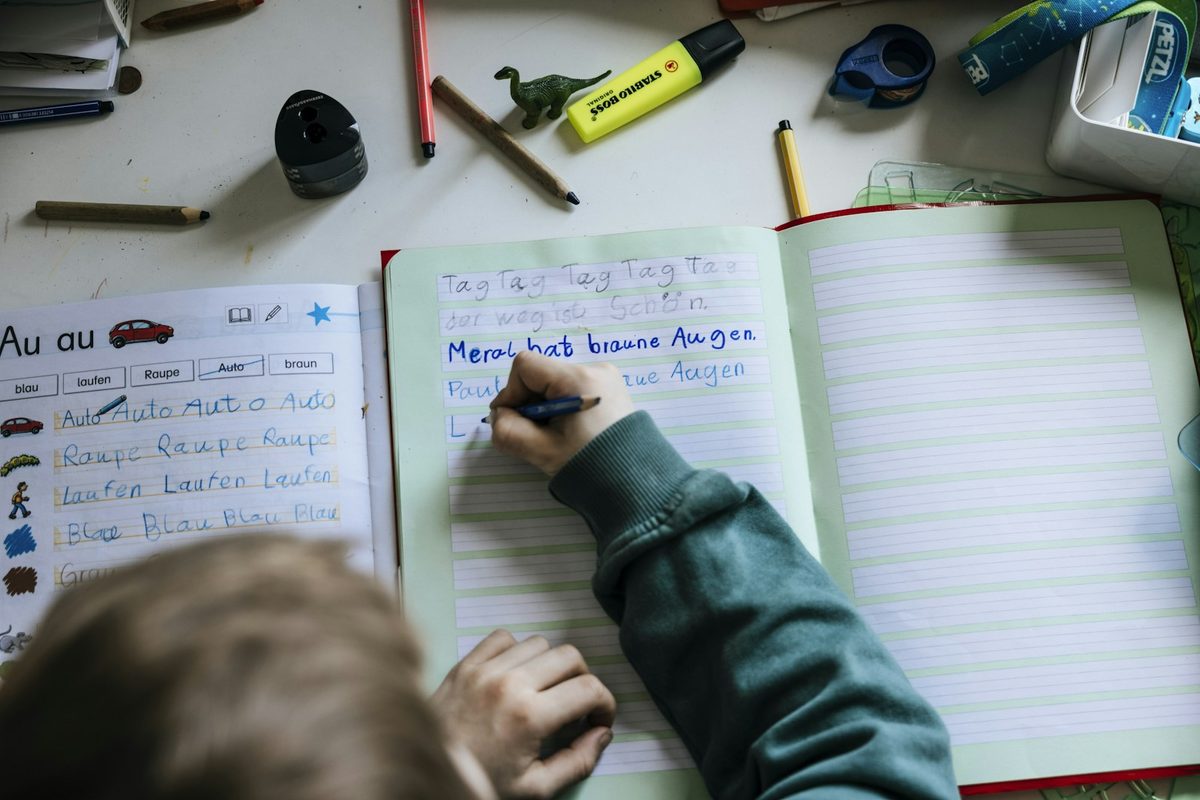
The third point is the one most often skipped. If a child’s hand hurts after a paragraph, the problem is grip or posture, and joining will make it worse rather than better.
That underlying mechanics is covered in pencil grip and handwriting, which is worth resolving before starting cursive at all.
Why starting points decide everything
Almost every join depends on a letter finishing in a predictable place, which in turn depends on where it started.
A child who draws a as a circle with a line added afterwards ends in the wrong place. That letter cannot join, no matter how neat it looks in isolation.
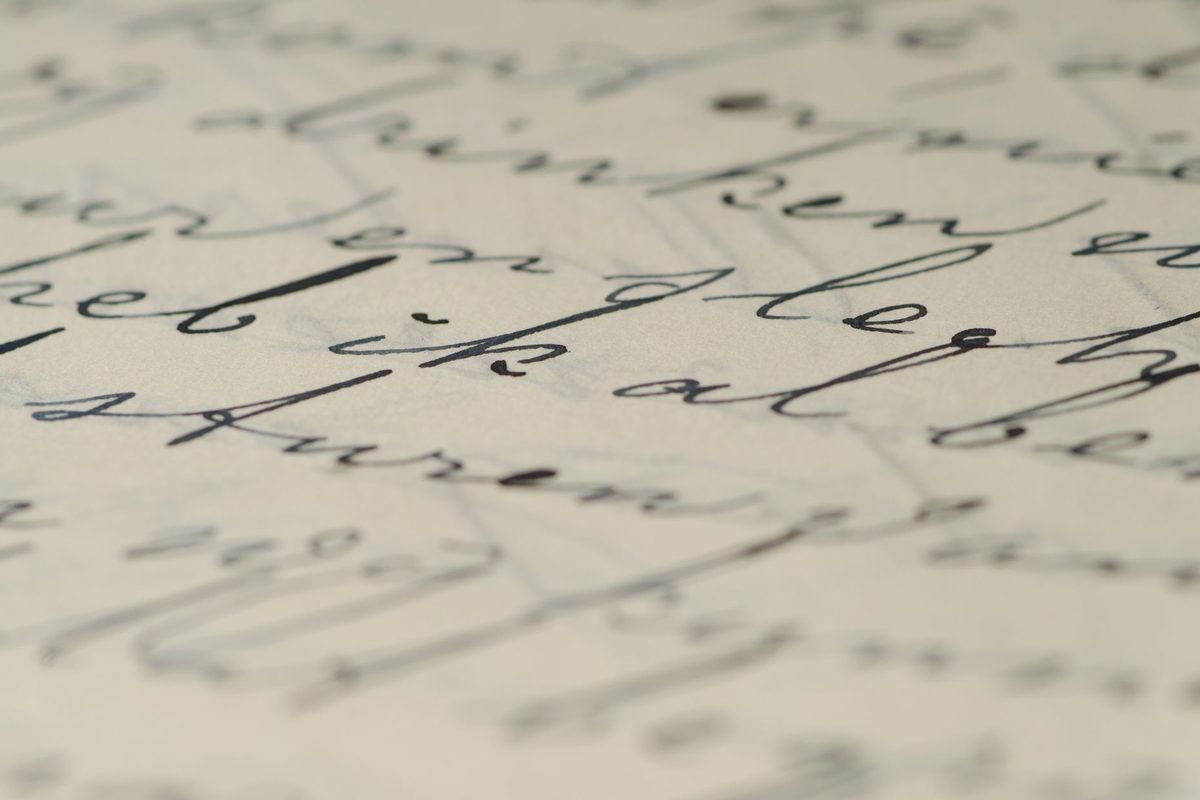
This is why correcting formation at five is worth far more than correcting neatness at eight. Neatness improves on its own; formation does not.
Which joins to teach, and in what order
Teaching joins alphabetically is a common mistake. Joins fall into families based on how a letter exits, and grouping them that way makes each one transfer to several letters at once.
| Order | Join type | Example | Why here |
|---|---|---|---|
| 1 | Diagonal to a short letter | in, an, un | Simplest exit and entry |
| 2 | Diagonal to a tall letter | ch, th, sh | Same motion, longer stroke |
| 3 | Horizontal from the top | oa, ve, wi | New exit point to learn |
| 4 | Joins to a round letter | ad, cd, og | Requires precise entry |
Swipe the table sideways to see every column.
Start with pairs that appear constantly in real words. A child who can write in, an and th fluently already has most of what English needs.
The letters that cause trouble
Four letters end below the line or in an awkward position: b, g, j and y. Most schemes simply do not join out of them.
Telling a child that these letters are allowed to stand alone removes a surprising amount of frustration. It is a rule, not a failure.
Does joining actually help?
The reliable benefit is speed. A joined hand requires fewer pen lifts, so it sustains a higher writing rate over a long piece of work.
That matters most in the years when children start writing extended answers, because slow handwriting occupies attention that should be going into what they are writing.
The claims that go further — that cursive improves memory or intelligence — are much weaker than they are usually reported. Speed and stamina are the honest case.
Handwriting requirements in England are set out in the national curriculum, published on GOV.UK, which expects joining to begin once letter formation is secure rather than at a fixed age.
Print and cursive compared
| Measure | Cursive | |
|---|---|---|
| Speed over a page | Slower | Faster once fluent |
| Legibility to others | Higher | Depends on the writer |
| Ease of learning | Easier | Harder, needs print first |
| Hand fatigue | More pen lifts | Fewer, less tiring |
| Form filling | Required | Not accepted |
Both are worth having. Children need print for forms and labels for the rest of their lives, so cursive replaces nothing.
Practising without grinding
Short and frequent beats long and occasional. Five minutes daily produces better results than half an hour at the weekend, because handwriting is motor learning.
Practise real words rather than isolated letters as soon as possible. Repeating a letter fifty times teaches the letter; writing words teaches the joins between them.

Watch them write rather than only reading the result. A page can look acceptable while every letter was formed backwards, and that will surface later as a ceiling on speed.
Pencil remains the right tool throughout, because it allows correction without mess — the reasoning is set out in pen vs pencil for school. Left-handed children need a few specific adjustments, covered in left-handed writing.
Fitting the practice into an existing routine works better than adding another task, which is the approach in homework routines that work.
Frequently asked questions
At what age should children learn cursive writing?
Usually around six or seven, but readiness matters more than age. Print letters should be formed correctly and automatically, sit consistently on the line, and be sustainable for about ten minutes without discomfort before joining is introduced.
Should cursive be taught before print?
No. Joining depends on letters ending in predictable places, which only happens once formation is secure. Teaching cursive first tends to produce children who can do neither reliably, and print is still needed for forms and labels throughout adult life.
Which letters do not join in cursive?
Most schemes do not join out of b, g, j and y, because each ends below the line or in an awkward position. Treating this as a rule rather than a mistake removes a lot of frustration for children who assume everything must connect.
Is cursive writing faster than print?
Once fluent, yes, because fewer pen lifts are needed across a page. The advantage only appears after the joins are automatic, and during the learning period a child will usually write more slowly than they did in print.
How long should handwriting practice be?
About five to ten minutes daily. Handwriting is motor learning, so frequency matters far more than session length, and short sessions of real words beat long sessions of repeated single letters.
My child’s cursive is messy. What should I fix first?
Watch them write before judging the page. Check where each letter starts and which direction it travels, then check size consistency. Correcting formation and starting points fixes most messiness, whereas asking for neater work rarely changes anything.