Tic Tac Toe Strategy: Why the Game Is Already Solved
The opening moves that guarantee at least a draw, the two forks that actually win, and why the game dies once both players know them.
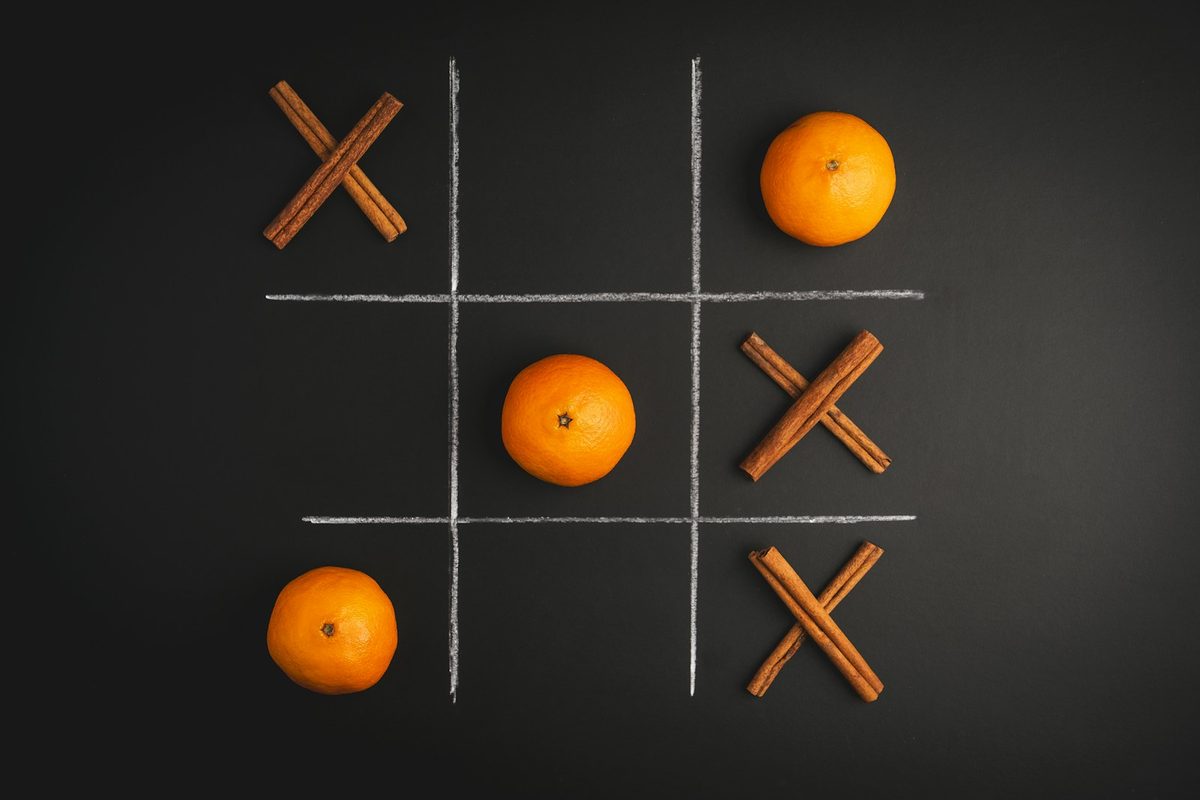
Tic tac toe is the first strategy game most children learn, and the first one they abandon. Both things happen for the same reason.
The game is solved. Mathematicians have worked through every possible position, and the conclusion is that two players who both know what they are doing will draw every single time.
Good tic tac toe strategy is therefore not about winning. It is about never losing, and then recognising the exact moment an opponent hands you a win.
Key takeaways
- Perfect play by both sides always ends in a draw. Nobody can force a win.
- Going first, the centre is the strongest opening and a corner is second.
- Going second, if your opponent takes the centre you must take a corner.
- Wins come from a fork: one move that creates two threats at once.
- Always block an immediate three before pursuing your own plan.
Why the game is already solved
The board has only nine squares, so the number of distinct games is small enough to check exhaustively. Once symmetry is accounted for there are far fewer genuinely different openings than the raw count suggests.
Work through all of them and the same answer appears every time: with best play from both players, the result is a draw.
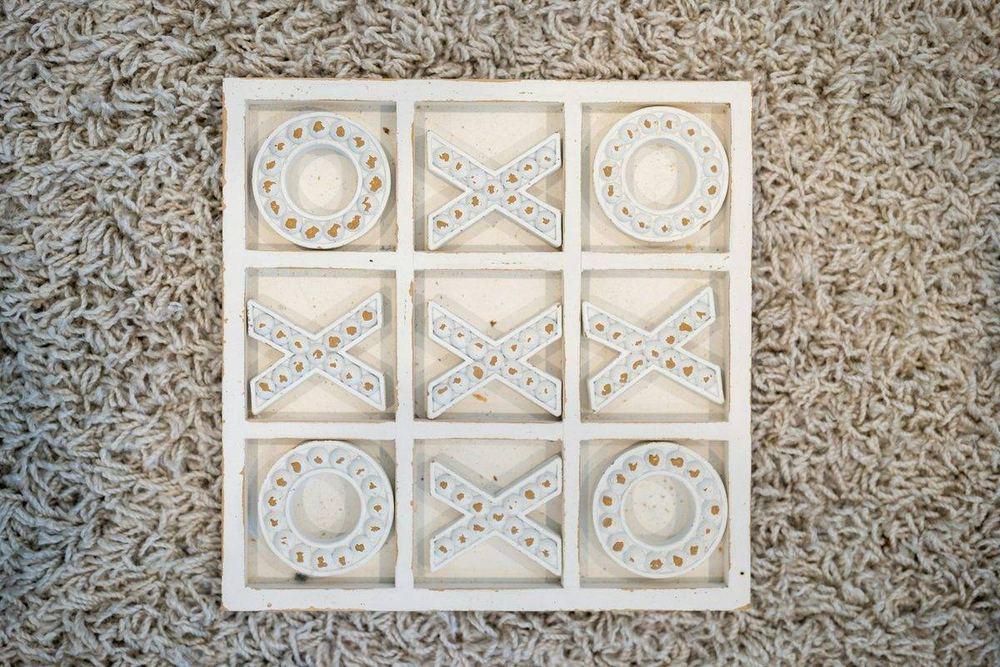
This makes tic tac toe unusual and genuinely useful. Very few games children meet can be completely understood, and the experience of exhausting one is worth having.
The mathematics of games like this is explored well by Plus Magazine, published by the University of Cambridge.
The opening move
Not all nine squares are equal, because they do not sit on the same number of winning lines.
| Square | Lines through it | Strength as an opening |
|---|---|---|
| Centre | 4 | Strongest — row, column and both diagonals |
| Corner | 3 | Strong — and sets the best traps |
| Edge | 2 | Weakest — avoid opening here |
The centre belongs to four lines, a corner to three, and an edge to only two. That ranking is the whole reason the centre is the standard opening.

Opening on an edge is the one clear mistake available on move one. It gives away the initiative for nothing.
Replying to the first move
The second player’s job is narrower: survive. There is exactly one rule that matters.
If your opponent takes the centre, take a corner. Replying on an edge loses against anyone who knows what they are doing.
If your opponent opens in a corner instead, take the centre. If they open on an edge, take the centre as well.
| They open | You must play | If you do not |
|---|---|---|
| Centre | Any corner | An edge reply loses |
| Corner | The centre | Anything else can lose |
| Edge | The centre | You give up a free advantage |
Swipe the table sideways to see every column.
The fork: how wins are actually made
A fork is a single move that creates two separate threats to make three in a row. Your opponent can block one of them, and you take the other.
Every genuine win in tic tac toe comes from a fork. There is no other mechanism.

The classic corner trap
Open in a corner. If your opponent replies anywhere except the centre, you can usually build a fork within two more moves.
The trap works because a corner opening threatens along a row, a column and a diagonal simultaneously, giving you three directions to combine.
The order of priorities
On every turn, work down this list and play the first thing that applies:
- Win if you have three in a row available.
- Block if your opponent does.
- Fork if you can create two threats at once.
- Block a fork by forcing a defence they must answer.
- Take the centre, then an opposite corner, then any corner, then an edge.
Follow that list exactly and you will never lose a game of tic tac toe again.
What to do when the game dies
Two children who both learn this will draw forever, and the game stops being interesting. That is not a failure — it is the game being finished.

The usual fix is to enlarge it. Four in a row on a larger grid restores genuine uncertainty, because the position space becomes too big to hold in your head.
Several deeper alternatives that still need nothing but paper are listed in pencil and paper games, and the shortest ones are collected in games you can play with just a pencil.
Using it to teach
Because the game is small enough to solve, it is an unusually good way to introduce the idea that some questions have complete answers.

Ask a child to find every reply that loses to a corner opening. That is real analysis, and it connects naturally to the ideas in teaching probability to kids.

It also travels perfectly. A grid drawn on the back of a receipt works as well as anything, which is why it appears in most lists of travel games for kids.
Frequently asked questions
Can you always win at tic tac toe?
No. The game is solved, and two players using correct strategy will draw every time. You can guarantee never to lose, but you can only win if your opponent makes a mistake, so the realistic goal is to play perfectly and wait.
What is the best first move in tic tac toe?
The centre, because four winning lines pass through it compared with three through a corner and two through an edge. A corner opening is a close second and actually sets more traps for an inexperienced opponent, but an edge opening is a genuine error.
What is a fork in tic tac toe?
A fork is one move that creates two separate threats to complete a line. Your opponent can only block one of them, so the other wins on your next turn. Every win in the game comes from creating a fork or from the opponent missing a block.
How do you stop someone winning at tic tac toe?
Check for their immediate three in a row and block it before doing anything else. Then look one move further for any square that would give them two threats at once, and either occupy it or create a threat of your own that forces them to defend.
At what age do children lose interest in tic tac toe?
Usually around seven or eight, once they work out that a careful game always ends in a draw. That is the game being understood rather than outgrown, and it is a good moment to move to a larger grid or to a paper game with more depth.
Is tic tac toe good for maths?
Yes, more than it appears. It introduces exhaustive analysis, symmetry and the idea of a solved problem using only nine squares. Asking a child to prove that a particular reply loses is a genuine piece of reasoning they can complete themselves.