Travel Games for Kids Without Screens
Travel games chosen for the real constraints of a car, train or departure gate — no surface, no space, limited patience.

Travel is the hardest environment there is for a game. No table, no flat surface, limited light, restricted movement, and everyone within earshot of everyone else.
Most game lists ignore all of that. These are chosen specifically for the constraints of a car, a train or a departure gate.
The good news is that the restrictions rule out most options quickly, so the choice is smaller than it first appears.
Key takeaways
- Anything needing a steady writing surface will not work in a moving vehicle.
- Verbal games are the backbone of car travel — nothing to hold, nothing to drop.
- Pack games that survive being dropped in a footwell, because they will be.
- Match the game to the stage of the journey; energy falls sharply after the first hour.
- Waiting is different from moving — airports allow games cars do not.
Match the game to the situation
The three travel environments have almost nothing in common, and a game that saves a flight delay may be unusable in a car.
| Environment | Surface | Noise tolerance | Best game type | Avoid |
|---|---|---|---|---|
| Moving car | None | Moderate | Verbal and spotting games | Anything written or with pieces |
| Train | Often a table | Low | Quiet paper games | Loud or animated games |
| Plane | Tray table | Low | Small, contained games | Anything that rolls |
| Waiting area | Floor or seat | Higher | Active or spread-out games | Nothing much |
Swipe the table sideways to see every column.
Games for a moving car
Nothing written, nothing held, nothing that rolls off a lap.
Twenty Questions
One person thinks of something; everyone else narrows it down with yes-or-no questions. Scales to any age and stops instantly when someone needs the radio turned up.
It also survives interruption better than almost anything else here. A question left hanging while you navigate a junction is still there two minutes later.
The Alphabet Game
Find something beginning with A, then B, and so on, using road signs and passing scenery. Works well because the difficulty naturally rises as you go.
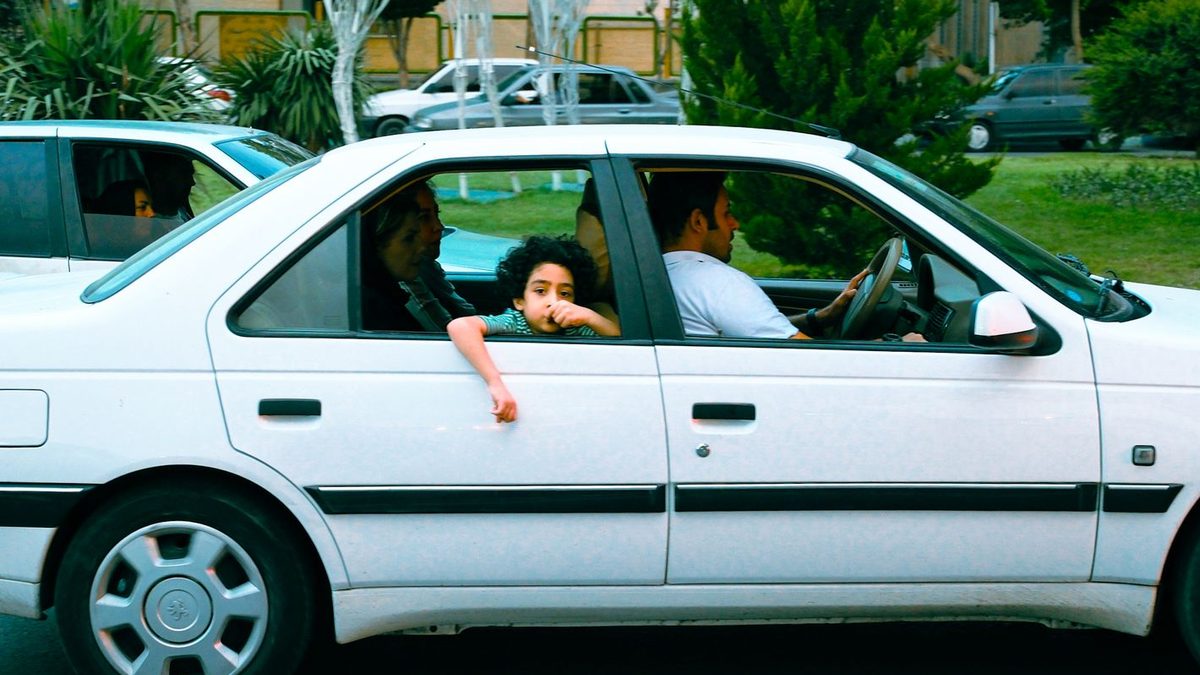
Fortunately, Unfortunately
Build a story one sentence each, alternating between “fortunately” and “unfortunately”. Reliably ends up absurd, which is the point.
Guess What I Am Looking At
A gentler version of I Spy for younger children: describe something visible without naming it, and let them guess. Works at any speed and needs no spelling.
Number-plate games
Make a phrase from the letters, spot plates from as many regions as possible, or add the digits and race to the total. Endlessly renewable, since the material keeps arriving.
Games for trains and planes
Here you usually have a small flat surface, and the constraint shifts from movement to noise.
- Dots and Boxes. Silent, scales to whatever time remains, needs one sheet.
- Hangman. Almost no writing and no grid to draw straight.
- Consequences. Folded-paper storytelling, entirely silent.
- Squiggle. One person draws a shape, the other turns it into a picture.
Full rules for these are in our guide to two-player pencil and paper games.
Keep the paper loose rather than in a book. A single sheet can be handed across a seat; a notebook needs somewhere to rest and a free hand to hold it open.
Games for waiting
Delays are the easiest environment, oddly. There is floor space, standing is allowed, and the noise budget is far more generous than on any moving vehicle you will board afterwards.
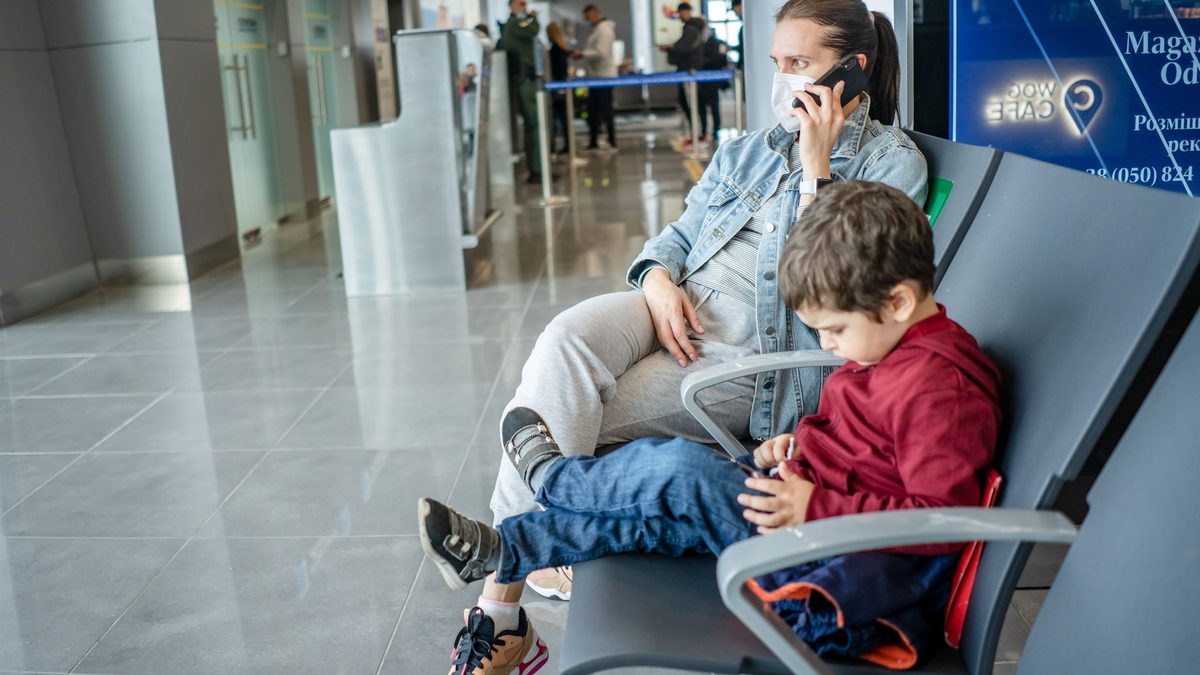
- I Spy. Works better in a terminal than a car, because the scenery stops moving.
- Categories. Pick a letter and a category, take turns until someone stalls.
- Guess the gate. Invent a story about where a departing flight is going.
- Quiet duels. Any two-player game resolved in seconds with something in a pocket.
What to actually pack
The test for a travel game is not how fun it is. It is whether it survives being dropped, whether it needs both hands, and whether losing one piece ruins it.
| Item | Survives a footwell | Needs a surface | Verdict |
|---|---|---|---|
| Nothing at all | Yes | No | Verbal games win by default |
| Paper and a pencil | Yes | Yes | Best value in the bag |
| A single pencil | Yes | No | Doubles as a game and a pencil |
| Card deck | Mostly | Yes | Good on trains, poor in cars |
| Dice | They roll away | Yes | Leave them at home |
| Board game with pieces | No | Yes | Not worth the risk |
Swipe the table sideways to see every column.
The third row is worth noting. A game played by rolling a pencil rather than dice cannot roll under a seat, needs no table, and leaves you holding something useful when the game ends — which is how a Battle Pencils duel works.
Pacing the journey
Energy is not constant, and using your best material in the first twenty minutes is a common mistake.
- First hour. Everyone is fresh. Save the good games.
- Second hour. Peak boredom. Deploy the ones with the most staying power.
- Third hour onwards. Quiet, low-effort games. Nobody wants to think hard now.
- Final stretch. Counting down landmarks works better than any game.

Advice on keeping children comfortable and safely occupied on long journeys is published by road-safety organisations such as RoSPA. For mixed-age groups, our guide to games for children of different ages covers handicapping so the youngest stays interested.
Frequently asked questions
What are the best travel games for kids without screens?
In a moving car, verbal games work best: Twenty Questions, the Alphabet Game, Fortunately Unfortunately and number-plate games. On trains and planes, where there is a small surface, quiet paper games such as Dots and Boxes and Hangman work well.
What games can you play in a car without writing?
Any purely verbal game. Twenty Questions, I Spy, the Alphabet Game, Categories and story-building games need nothing held or written, so they survive corners, bumps and the general impossibility of writing in a moving vehicle.
What should you not pack as a travel game?
Anything that rolls, anything with small pieces that ruin the game if one is lost, and anything needing a stable surface. Dice are the classic mistake in a car, since they end up under a seat within minutes.
How do you keep children entertained on a long journey?
Pace it rather than front-loading. Save your strongest games for the second hour when boredom peaks, switch to low-effort quiet games after that, and finish by counting down recognisable landmarks as you approach the destination.
What travel games work for different ages at once?
Games with naturally scaling difficulty work best, such as the Alphabet Game or Twenty Questions, where a younger child can contribute simple answers while an older one takes harder letters or more abstract subjects.
Are paper games practical on a plane?
Yes, provided there is a tray table. Dots and Boxes, Hangman, Squiggle and Consequences are all quiet, need only one sheet, and can be abandoned instantly when meals arrive or the table has to be stowed.