Left-Handed Writing: The Adjustments That Actually Help
Why left-handers smudge and hook their wrist, the paper angle that fixes most of it, and where to hold the pencil.

Roughly one child in ten writes with their left hand, and almost all handwriting advice is written for the other nine.
Left-handed writing is not harder. It is differently arranged, and a few specific adjustments remove most of the difficulty before it becomes a habit.
Key takeaways
- A left-hander pushes the pencil across the page; a right-hander pulls it.
- Tilt the paper clockwise, 30 to 40 degrees — the single most effective change.
- Hold the pencil 2 to 3cm from the point, higher than a right-hander, to see the writing.
- Seat them on the left of a right-handed neighbour so elbows do not collide.
- The “hooked” wrist is a workaround for smudging, and it is largely preventable.
Why it is different
English runs left to right, which means a right-hander drags the pen away from what they have written. A left-hander pushes into the page and travels across everything just written.
Two consequences follow, and every other difficulty comes from them. The hand covers the words as they are formed, and it drags through graphite or wet ink.
Left-handed writing problems are almost always downstream of those two facts, which is why fixing the arrangement works better than correcting the child.
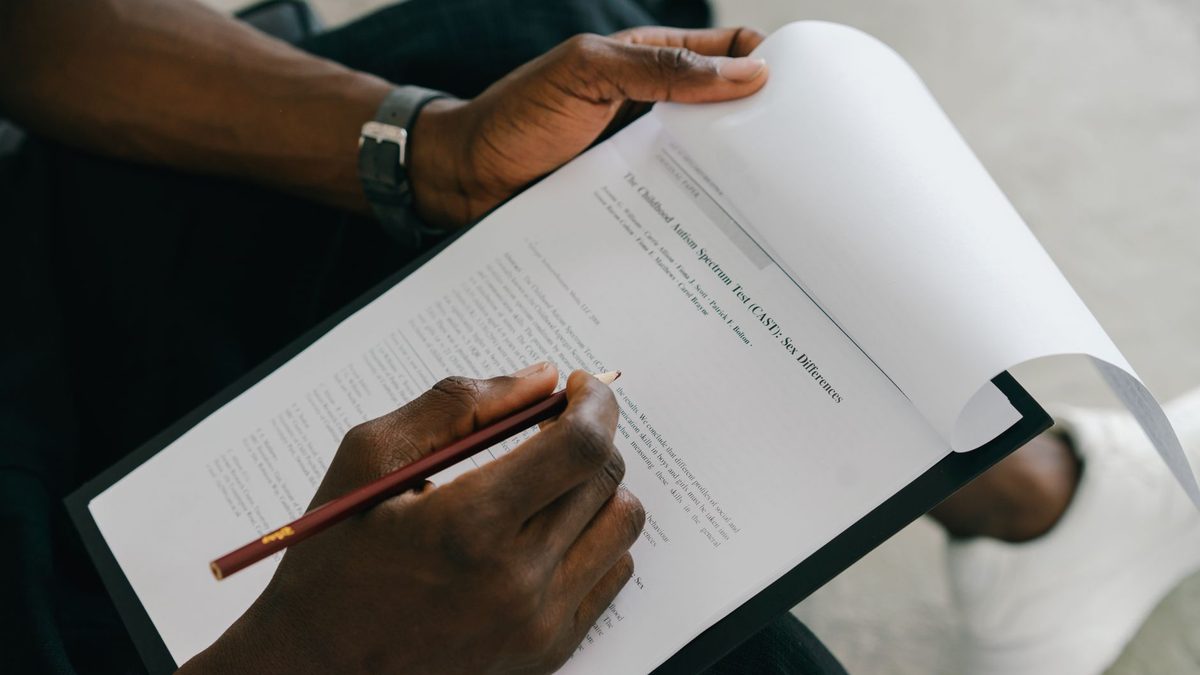
The hooked wrist, and why it happens
Left alone to solve it, most children invent the same fix: curl the wrist over the top of the writing line so the hand approaches from above.
It works. They can see their words and they stop smudging. It is also uncomfortable, slow, and tiring over any length of writing, and once established it is hard to unlearn.
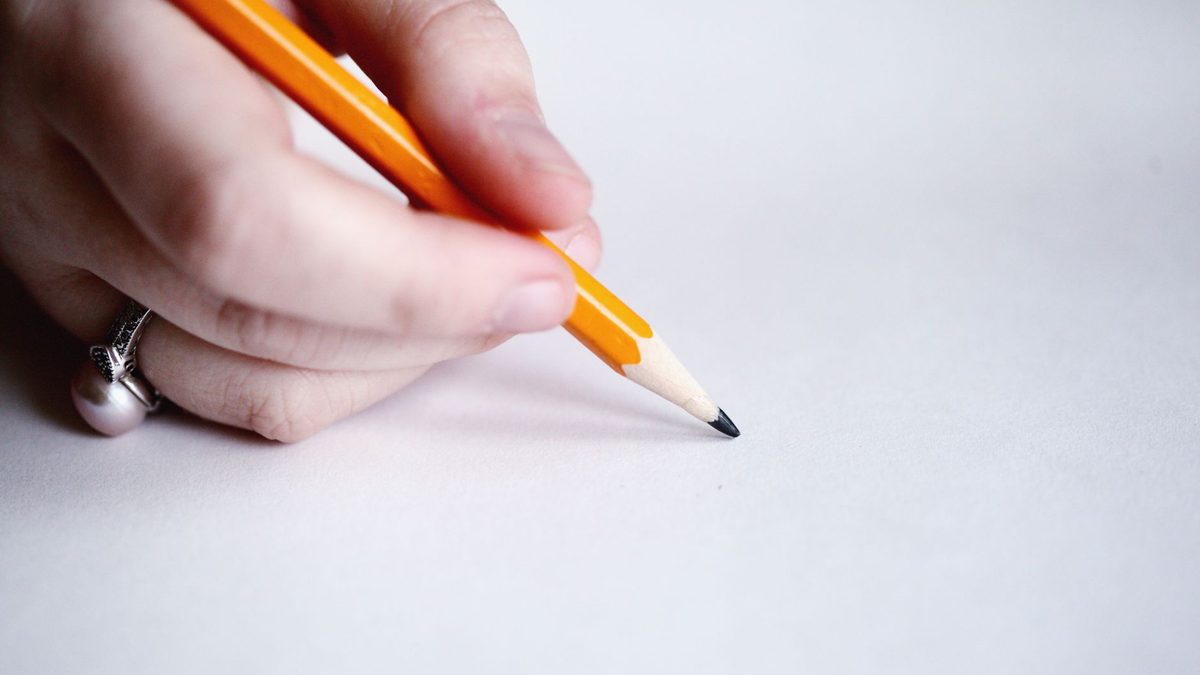
The aim is to make the hook unnecessary rather than to correct it directly. The wrist should stay almost straight, with the hand below the writing line.
Tilt the paper
This is the fix that does most of the work, and it takes two seconds.
Rotate the page clockwise, roughly 30 to 40 degrees, so the bottom-left corner points toward the body. The writing line now runs away from the hand instead of under it.
Right-handers tilt anticlockwise for exactly the same reason, and nobody thinks it unusual. The other hand should rest flat on the page to stop it sliding.
Where to hold the pencil
Left-handers benefit from gripping higher up the barrel than right-handers do — around 2 to 3cm from the point rather than right down at the tip.

That extra distance lets them see past their own fingers to the letters being formed. A pencil grip fitted at the right spot, or simply a mark drawn on the barrel, makes the position obvious without nagging.
Otherwise the aim is the same functional grip described in pencil grip and handwriting: thumb and index on the barrel, resting on the middle finger, fingers moving rather than the whole arm.
What to change, and what to leave alone
| Adjustment | Effect | Effort |
|---|---|---|
| Tilt paper clockwise 30–40° | Largest single improvement | Two seconds |
| Grip 2–3cm from the point | They can see what they write | Mark the barrel |
| Seat left of a right-hander | No elbow collisions | Seating plan only |
| Other hand flat on the page | Paper stops sliding | A reminder |
| Sloped writing surface | Helps early writers | A folder under the paper |
| Pencil rather than ink | Removes wet smudging | None |
| Forcing right-handed writing | Harmful — do not | N/A |
Swipe the table sideways to see every column.
That last row is not a live debate any more, but it is worth stating plainly: handedness is not a preference to be corrected.
Seating and elbow room
A trivially small change that teachers can make on the first day.
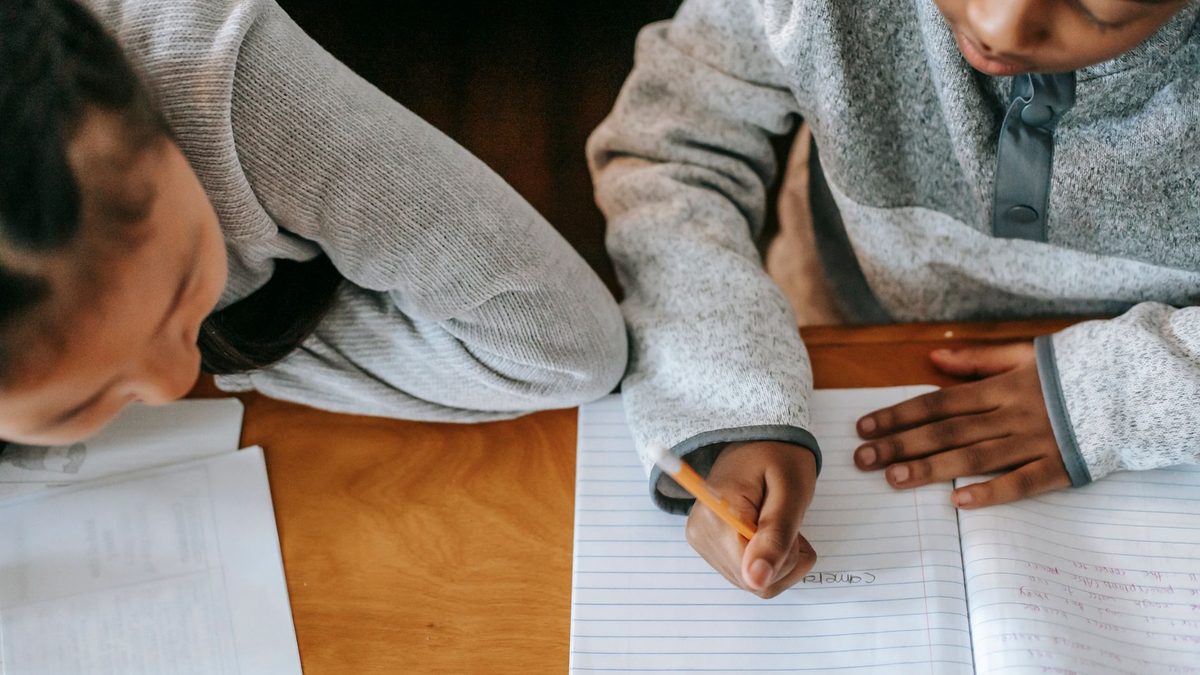
If a left-hander sits to the right of a right-hander, their writing elbows meet in the middle all day. Reverse the pair and the problem disappears entirely.
The same applies at home at a shared table, and it is worth checking before assuming a child is fidgeting or leaning oddly.
Worth checking the light too. A left-hander casts a shadow across their own writing from a lamp on the left, so the light wants to come from the right.
Pencils, pens and other tools
Pencil is genuinely easier than ink for a left-hander, because graphite smudges less than wet ink and dries instantly. If pens are required, quick-drying gel ink is considerably better than a fountain pen.
Scissors are the item where left-handed versions make a real difference, because the blade orientation hides the cutting line for a left-hander. Most other “left-handed” stationery is marketing. Awareness resources are published by groups such as Left Handers Day.
Pencil grade helps too. A softer grade needs less pressure, which means less graphite laid down and less to smudge — see how pencils are made for what the grades mean, and mechanical vs wooden pencils for the trade-offs between the two.
Do not make it a running commentary
Set the paper angle and the seating once, mention the grip position, and then leave it alone. A child reminded about their handedness every time they pick up a pencil learns that writing is something they do wrong.
When to seek advice
Left-handedness on its own is not a difficulty. It is worth asking a teacher or occupational therapist if a child reports pain while writing, tires far faster than classmates, or has a deeply hooked wrist that persists after the paper angle and grip position have been adjusted.
Frequently asked questions
How should a left-handed child position their paper?
Tilt it clockwise by roughly 30 to 40 degrees, so the bottom-left corner points toward the body. This is the mirror of what right-handers do, and it is the single most effective adjustment available.
Why do left-handed children smudge their writing?
Because English runs left to right, so a left-hander pushes the pencil across the page and drags their hand through what they have just written. Tilting the paper and using pencil rather than wet ink both reduce it substantially.
What is the hooked wrist position?
A posture where the wrist curls over the top of the writing line so the hand approaches from above. Children invent it to avoid smudging and to see their words. It works but is tiring, and correct paper angle usually makes it unnecessary.
Where should a left-handed child hold their pencil?
About 2 to 3cm from the point, slightly higher up the barrel than a right-hander would. That distance lets them see past their own fingers to the letters being formed. Marking the spot on the barrel helps establish it.
Where should a left-handed child sit in class?
To the left of any right-handed neighbour, so their writing elbows do not collide. It costs nothing to arrange and removes a constant low-level irritation that is easily mistaken for fidgeting.
Do left-handed children need special pens and pencils?
Rarely. Pencil is easier than ink because it does not stay wet, and quick-drying gel pens help when ink is required. Scissors are the one tool where a left-handed version genuinely matters, since the blade orientation otherwise hides the cutting line.