Novelty Pencils: Which Ones Actually Survive a School Year
Why novelty pencils break, what barrel material tells you, and a thirty-second test to run before committing to a bulk order.
Novelty pencils have a reputation problem, and mostly they have earned it. The fun ones snap, refuse to sharpen, or shed their coating within a fortnight.
That is not inevitable. It comes down to how the pencil is built, and the differences are visible before you buy.
Key takeaways
- Most novelty pencil failures come from poor core bonding, not from the decoration.
- Cedar or basswood barrels sharpen cleanly; cheap composite barrels tear.
- A dropped pencil is the usual cause of repeated lead breakage — the core cracks inside.
- Shrink-wrapped designs outlast printed ones but can gum up sharpeners.
- The best test is boring: does it still sharpen properly after three weeks?
Why they break
A wooden pencil is a graphite core glued into two grooved halves of wood. Almost everything that goes wrong is a failure of that bond or of the wood around it.
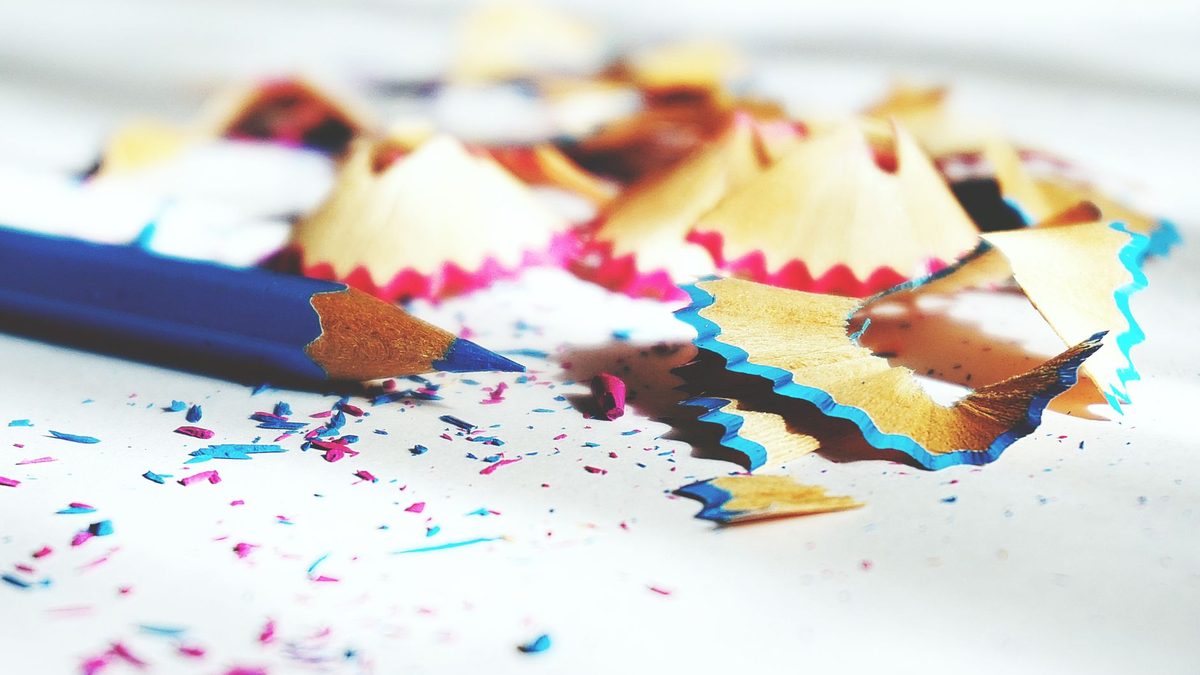
When a core is not seated properly, or the glue is thin, the graphite cracks in several places along its length. The pencil then breaks every time you sharpen it, and no amount of careful sharpening will fix it.
The same thing happens to a perfectly good pencil that gets dropped point-down on a hard floor often enough. Internal cracks are invisible from outside.
This is why one pencil in a pack can misbehave while the rest are fine, and why the fault often shows up weeks after purchase rather than on the first day.
What the barrel is made of
Traditional pencils use cedar, which is soft, straight-grained, and shaves cleanly. Basswood is the common modern substitute and performs well.
Cheaper novelty pencils often use reconstituted or composite wood. It holds a printed design nicely and sharpens badly, tearing rather than slicing.
| Material | Sharpens | Durability | Typical use | Watch for |
|---|---|---|---|---|
| Cedar | Excellent | High | Quality writing pencils | Costs more |
| Basswood | Very good | High | Most mainstream pencils | Nothing significant |
| Composite wood | Tears and chips | Moderate | Budget novelty pencils | Rough, flaky shavings |
| Extruded plastic | Poorly | Moderate | Bendy novelty pencils | Clogs sharpeners |
| Recycled paper | Variable | Variable | Eco novelty pencils | Quality differs hugely by maker |
Swipe the table sideways to see every column.
How the design is applied
There are two common approaches, and they fail differently.
Printed and lacquered
The design is printed onto the wood and sealed. Thin lacquer chips at the edges and around the ferrule, and the print wears where fingers grip.
Shrink-wrapped film
A printed sleeve is heat-shrunk onto the barrel. It survives handling far better and allows sharper, more detailed artwork.
The trade-off is sharpening: the film can bunch up and jam a cheap sharpener. A decent helical sharpener handles it without complaint.
Worth checking which sharpener a classroom actually owns before ordering thirty wrapped pencils. A mismatch here creates a queue at the bin every morning.
Grade matters more than people think
Most school pencils are No. 2, the American designation equivalent to HB on the European scale — the balanced midpoint of the pencil grading system.
Softer grades smudge and wear down quickly under a heavy-handed seven-year-old. Harder grades scratch the paper and need more pressure. For daily school use, HB is the right answer almost every time.
Novelty ranges sometimes ship in whatever grade was cheapest rather than HB, and it is rarely printed on the barrel. If the pack does not say, assume it was not chosen deliberately.
A three-week test
Ignore the packaging claims and check these instead.
| Check | Good sign | Warning sign |
|---|---|---|
| First sharpen | Long, curling shavings | Short, flaky, torn shavings |
| Core position | Centred in the barrel | Visibly off-centre |
| Three sharpens in | Point still holds | Breaks each time |
| Ferrule | Tight, no wobble | Loose or already detaching |
| Eraser | Lifts marks cleanly | Smears or crumbles |
| After three weeks | Still in the pencil case | Lost, snapped or abandoned |
Swipe the table sideways to see every column.
Novelty that survives being a pencil
The pencils children keep are the ones that stay useful. A pencil that is fun to look at and useless to write with gets abandoned in a drawer.
The most durable novelty is not a shape or a texture but something that gives the pencil a reason to come back out. Collectibility does this well, because a pencil that is part of a set has a value beyond its own barrel.
Pencils that are also a game go further still. Because a Battle Pencils duel is decided by a rolled number rather than a snapped shaft, the pencil survives the game and goes back to work — which is precisely the failure mode that ruins the old playground pencil fighting game.
Buying for a classroom
- Buy one pack first. Test before committing to thirty.
- Check the sharpener you actually own. Wrapped pencils and cheap sharpeners are a bad pairing.
- Prefer HB. Softer grades disappear fast under real classroom pressure.
- Count on loss. Assume a proportion will vanish regardless of quality.
If you are stocking a reward system rather than a stationery cupboard, the same durability logic applies — see classroom prize box ideas that are not junk.
Frequently asked questions
Why do novelty pencils break so easily?
Usually because the graphite core is poorly bonded inside the barrel, which lets it crack along its length. Once that has happened the point breaks every time you sharpen it. Cheap composite wood also tears rather than slicing, making clean sharpening difficult.
What are the best pencils for children?
An HB or No. 2 pencil in a cedar or basswood barrel suits almost all school use. HB is the balanced midpoint of the grading scale: softer grades smudge and wear down quickly, while harder grades scratch the paper and need more pressure.
Are wrapped novelty pencils bad for sharpeners?
Shrink-wrapped film can bunch up and jam an inexpensive blade sharpener, though a decent helical or crank sharpener handles it without difficulty. Wrapped designs are more hard-wearing than printed and lacquered ones, so it is a trade-off rather than a fault.
How can you tell if a pencil is good quality before buying?
Sharpen one. Long curling shavings indicate straight-grained wood, while short flaky shavings suggest composite material. Check that the core sits centred in the barrel and that the ferrule is tight with no wobble.
Why does my pencil keep breaking when I sharpen it?
The core has almost certainly cracked internally, either from poor manufacturing or from being dropped point-down onto a hard floor. Those cracks are invisible from outside, and no sharpening technique will recover the pencil once they exist.
Do collectible pencils last longer than ordinary ones?
Not physically, but they tend to survive longer in practice. A pencil that belongs to a set has a reason to be kept and brought back out, whereas an ordinary pencil is more readily lost or abandoned once the novelty fades.