How Erasers Work (and Which Type to Actually Buy)
Erasers lift graphite by adhesion rather than abrasion — why the crumbs matter, and which type is worth buying.
An eraser does not remove pencil marks. It steals them.
Graphite sits on top of paper fibres rather than soaking into them, held there weakly. An eraser works because graphite sticks to the rubber more willingly than it sticks to the paper — then the rubber crumbles away, carrying the marks off the page with it.
Once you know how erasers work, almost every complaint about them makes sense: the smudging, the crumbs, and why the one on the end of a pencil is the worst of the lot.
Key takeaways
- Erasers work by adhesion, not abrasion — graphite prefers the rubber to the paper.
- The crumbs are the mechanism. An eraser that never crumbles is damaging the paper instead.
- Vinyl erases most cleanly; natural rubber is gentler on thin paper.
- Kneaded erasers lift graphite without crumbs, and are the only ones you can shape.
- Hard pink erasers on pencil ends are the harshest common type and the likeliest to tear paper.
Why the crumbs matter
The crumbling is not wear and tear. It is the whole design.
As you rub, the eraser’s surface picks up graphite and then shears off, taking the particles with it. Fresh, clean rubber is continuously exposed underneath. If the material did not break away, it would simply smear the graphite around after a stroke or two.
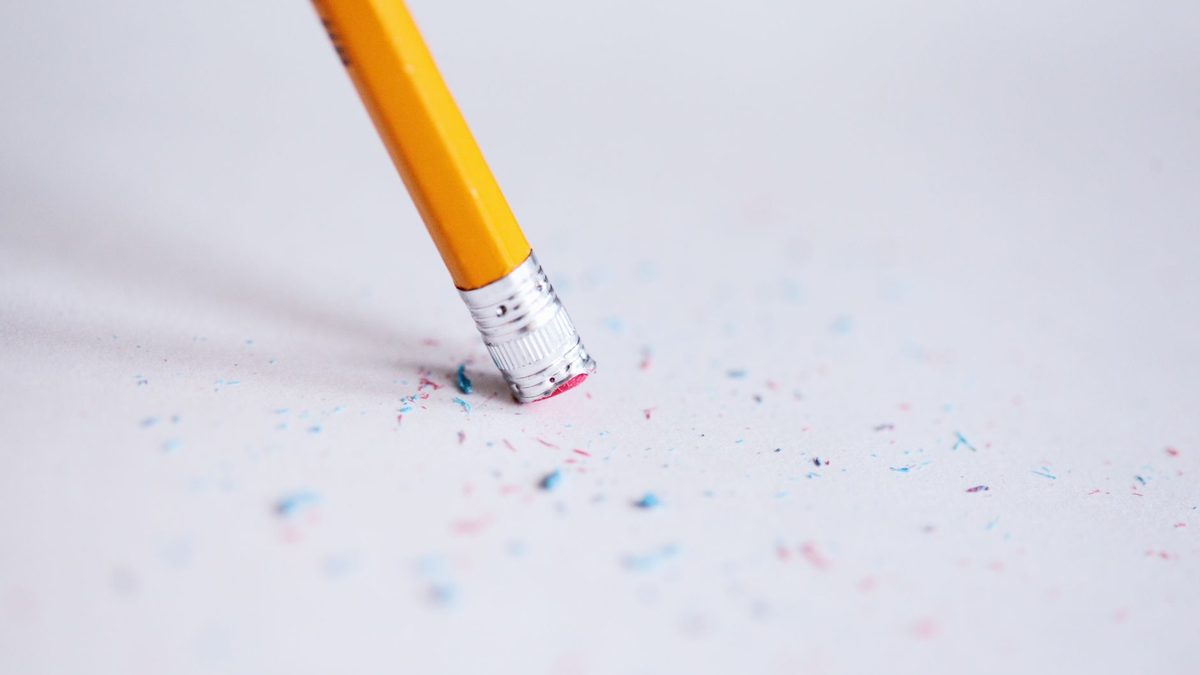
This explains a familiar frustration. An old, hardened eraser that leaves grey streaks has lost the ability to crumble. It is no longer lifting anything — it is polishing graphite into the paper.
Why some marks will not come out
Two things defeat an eraser entirely, and neither is the eraser’s fault.
The first is pressure. A hard-pressed line does not just deposit graphite; it dents the paper, and the groove survives long after the grey has gone. Hold the page to the light and you can still read it.
The second is time. Graphite gradually works into the fibres, so a mark made months ago sits deeper than one made this morning and never lifts as cleanly.
The main types
| Type | Material | Erases | Paper damage | Best for |
|---|---|---|---|---|
| Vinyl (plastic) | PVC compound | Very cleanly | Low, if used gently | Technical work, dark lines |
| Natural rubber | Latex rubber | Cleanly | Very low | General use, thin paper |
| Kneaded | Pliable putty | Lightens rather than removes | Almost none | Drawing, shading, highlights |
| Gum | Soft crumbly gum | Gently | Very low | Delicate or aged paper |
| Pink pencil-top | Hard rubber with abrasive | Roughly | High — can tear | Convenience only |
| Ink eraser | Heavily abrasive | By sanding the surface | Very high | Rarely worth using |
Swipe the table sideways to see every column.
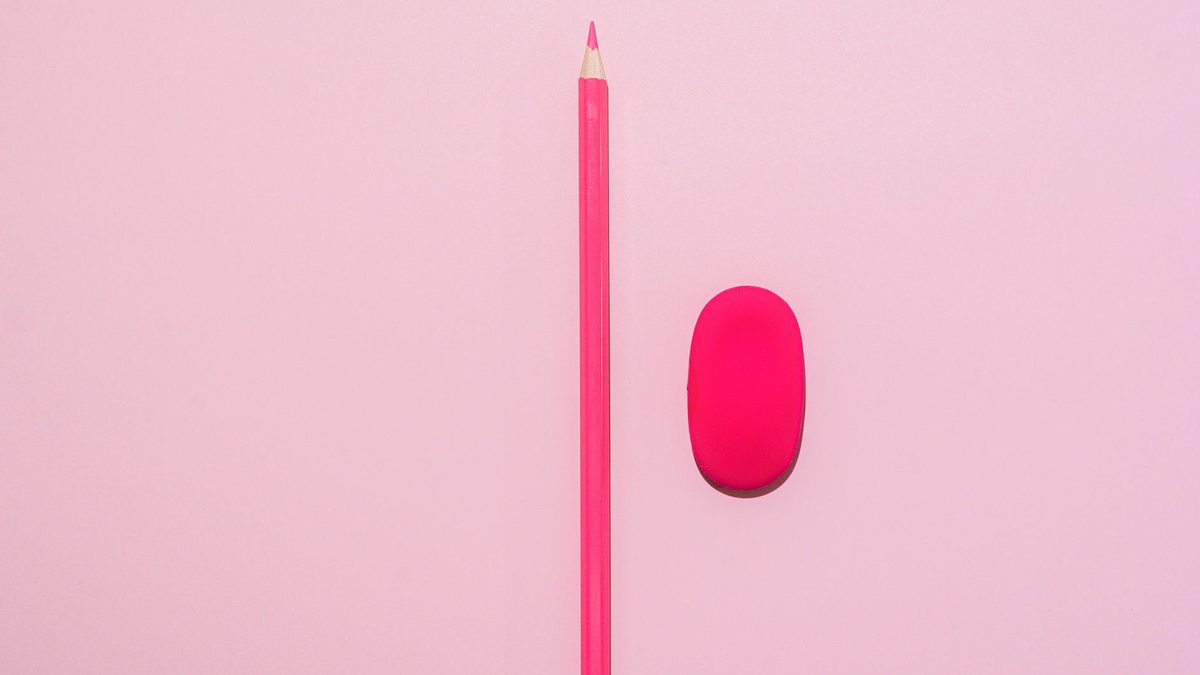
The pink one on the pencil
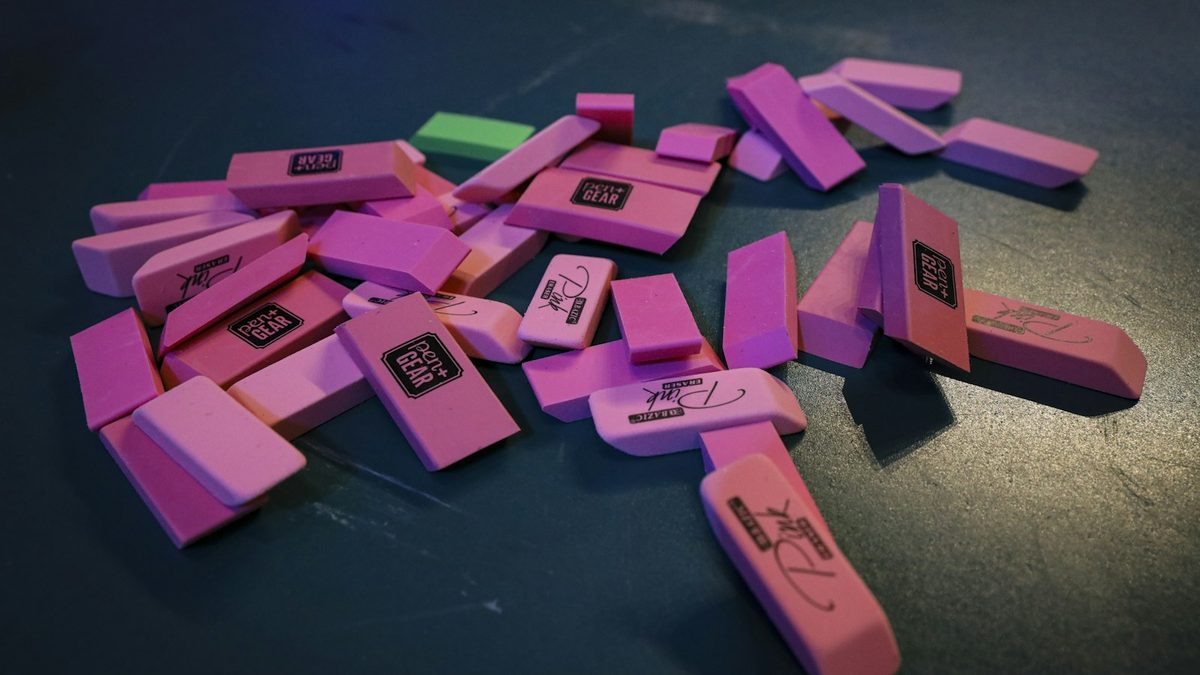
Traditional pink pencil-top erasers contain abrasive particles such as pumice, which is why they can shift a stubborn mark that a soft eraser will not.
It is also why they are the most likely to roughen or tear paper, and why they leave a pink-grey smear when tired. They are there for convenience rather than performance.
Kneaded erasers
The outlier. A kneaded eraser is soft putty that you press onto the paper rather than rub. It lifts graphite by contact, produces no crumbs at all, and can be pulled to a point for precise work.
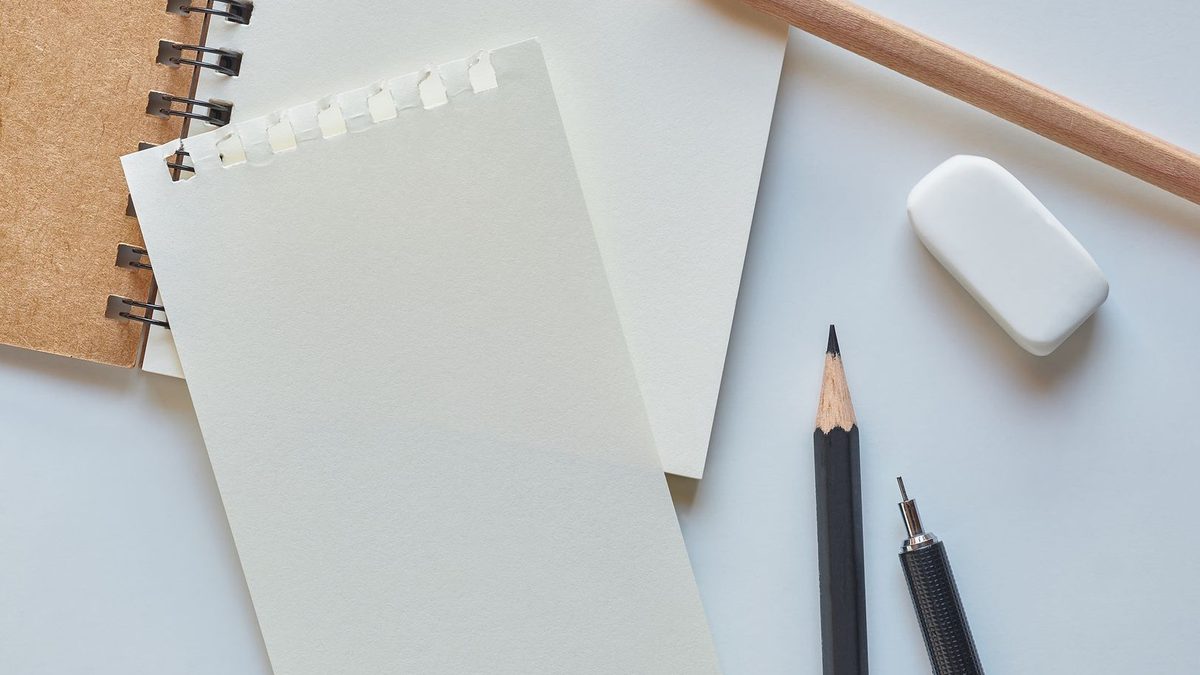
You clean it by stretching and folding, which buries the collected graphite inside. That makes it effectively self-renewing until the putty finally stiffens.
Using one properly
Technique matters more than most people expect.
- Light pressure, short strokes. Pressing hard drives graphite into the fibres rather than lifting it off.
- One direction. Scrubbing back and forth abrades the surface and pills the paper.
- Hold the paper down. Most tearing happens because the sheet was moving, not because the eraser was harsh.
- Brush, do not blow. Blowing adds moisture; brushing with the side of your hand smears. Use a clean piece of paper.
- Clean the eraser. Rub it on scrap until the grey is gone before touching your actual work.
Erasers in a classroom
Erasers vanish faster than almost anything else in a pencil case, which is why our guide to school supplies kids actually use puts them in the buy-cheap-and-buy-several category.
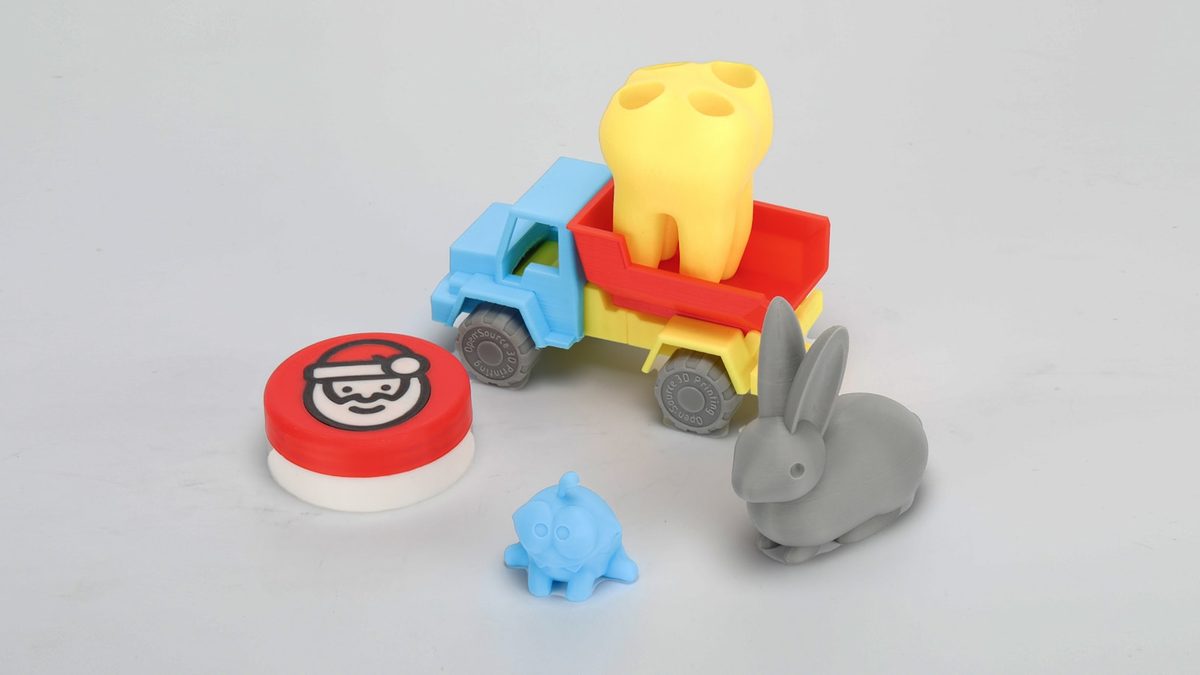
Novelty shaped erasers are worth understanding on their own terms. Most are made from a firmer compound so they hold their shape, which means they erase poorly. Children rarely mind, because they are collecting them rather than using them — a distinction covered in why kids collect things.
If you want an eraser that actually works, buy a plain block separately and treat the shaped ones as what they are. One of each solves the problem entirely.
Why paper matters too
The same eraser behaves completely differently on different paper. Cheap thin paper has short, loosely bound fibres that pill and tear easily. Heavier paper with a firmer surface tolerates far more erasing.
If erasing keeps damaging the page, the paper is often the variable worth changing rather than the eraser. The chemistry of these polymer compounds is explained in more depth by the Royal Society of Chemistry.
The pencil matters as well. A soft grade lays down far more graphite and needs more erasing to shift, while a harder grade can score a groove that survives erasing entirely — see how pencils are made for what the grades mean.
Frequently asked questions
How do erasers work?
By adhesion rather than abrasion. Graphite sits loosely on top of the paper fibres, and it sticks to the eraser’s rubber more readily than to the paper. The rubber then crumbles away, carrying the graphite particles off the page.
Why do erasers leave crumbs?
The crumbling is the mechanism, not a fault. As the surface picks up graphite it shears away, exposing clean rubber underneath. An eraser that no longer crumbles simply smears graphite into the paper instead of lifting it.
What is the best type of eraser?
Vinyl erasers remove marks most completely and suit dark or technical work. Natural rubber is gentler and better on thin paper. Kneaded erasers are best for drawing, since they lighten tone without crumbs and can be shaped to a point.
Why does my eraser smudge instead of erasing?
It has hardened with age and lost the ability to crumble, so it polishes graphite into the paper rather than lifting it off. Rubbing it on scrap paper sometimes exposes fresher material, but a hardened eraser usually needs replacing.
Are the pink erasers on pencils any good?
They are convenient rather than good. Most contain abrasive particles that let them shift stubborn marks, which also makes them the most likely to roughen or tear paper. A separate block eraser performs considerably better.
How do you stop an eraser tearing the paper?
Use light pressure and short strokes in one direction, and hold the sheet flat with your other hand. Most tearing happens because the paper was moving. Thin, cheap paper pills far more easily regardless of which eraser you use.