Card Games for Kids, Sorted by What They Actually Demand
Card games matched to age from War up to Whist — plus the fine motor problem nobody mentions when a child cannot hold a hand.
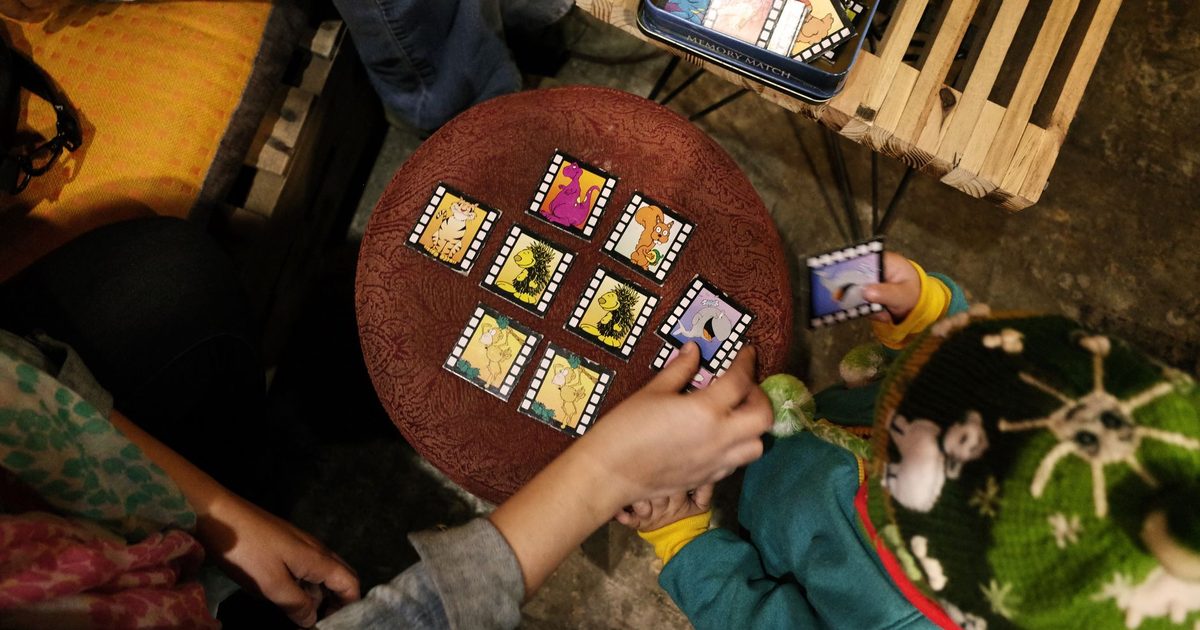
A standard deck costs almost nothing and contains several dozen games. That is a better return than any toy in the house, and it fits in a coat pocket.
These are card games for kids that are genuinely worth learning, sorted by what they actually demand of the player rather than by how old the box says they are.
Key takeaways
- One deck covers ages four to fourteen — the games change, the equipment does not.
- Start with matching and speed games, then move to trick-taking, then to games with hidden information.
- Holding a fan of cards is a physical skill young children have not developed yet. Work around it.
- Shuffling badly is the most common cause of a game feeling unfair.
- Cards beat dice for travel because they do not roll away.
Start here: matching and speed
These need no strategy at all, which is the point. A four-year-old can win one on the first attempt.
Snap
Deal the whole deck face down between players. Take turns flipping a card onto a central pile, and when two matching values appear consecutively, the first to shout “snap” takes the pile.
Pure reaction speed. It is loud, brief, and reliably the first card game a child learns.
It is also the one to stop before anyone gets tired, since the shouting and grabbing escalate quickly with more than two players.
Go Fish
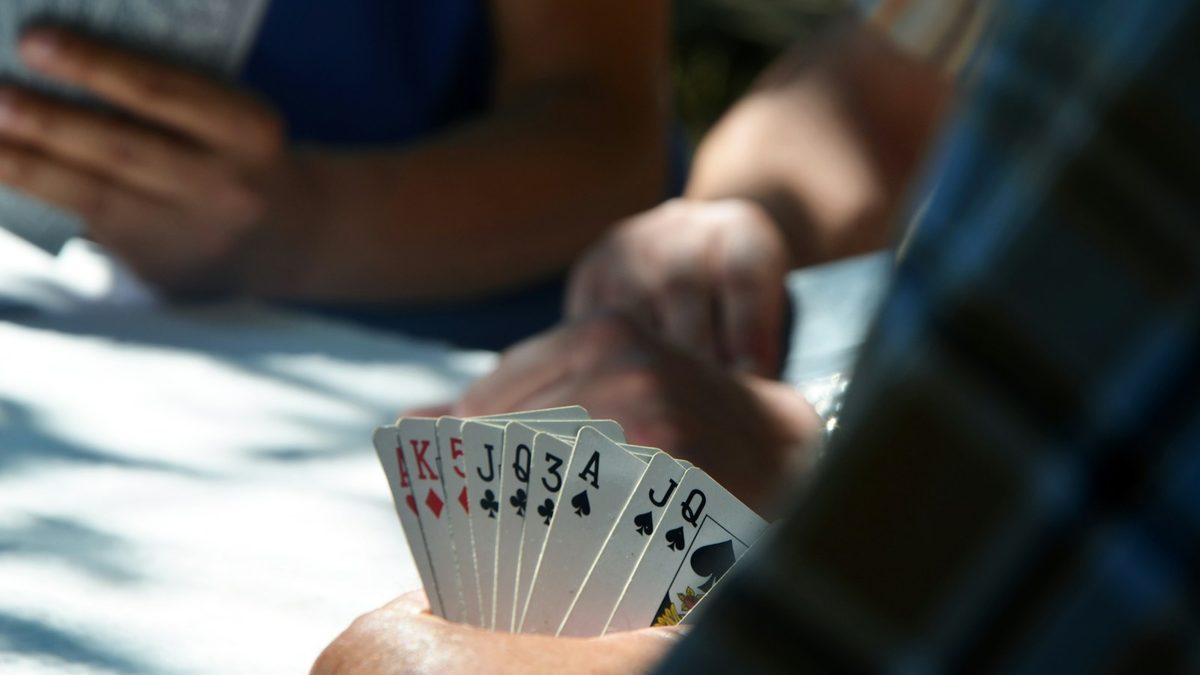
Each player holds a hand and asks opponents for a specific value, collecting sets of four. The first real introduction to holding cards and remembering what other people asked for.
War
Split the deck, both flip simultaneously, higher card takes both. It requires no decisions whatsoever, which makes it perfect for teaching that higher beats lower and nothing else.
Next: trick-taking and shedding
Here a decision appears, and with it the first opportunity to play well.
- Crazy Eights. Match the top card by suit or value, eights are wild. The ancestor of most modern shedding games.
- Old Maid. Discard pairs, avoid being left with the odd card. Bluffing appears here for the first time.
- Sevens. Build suits outward from the seven. Simple rules, real decisions about when to block.
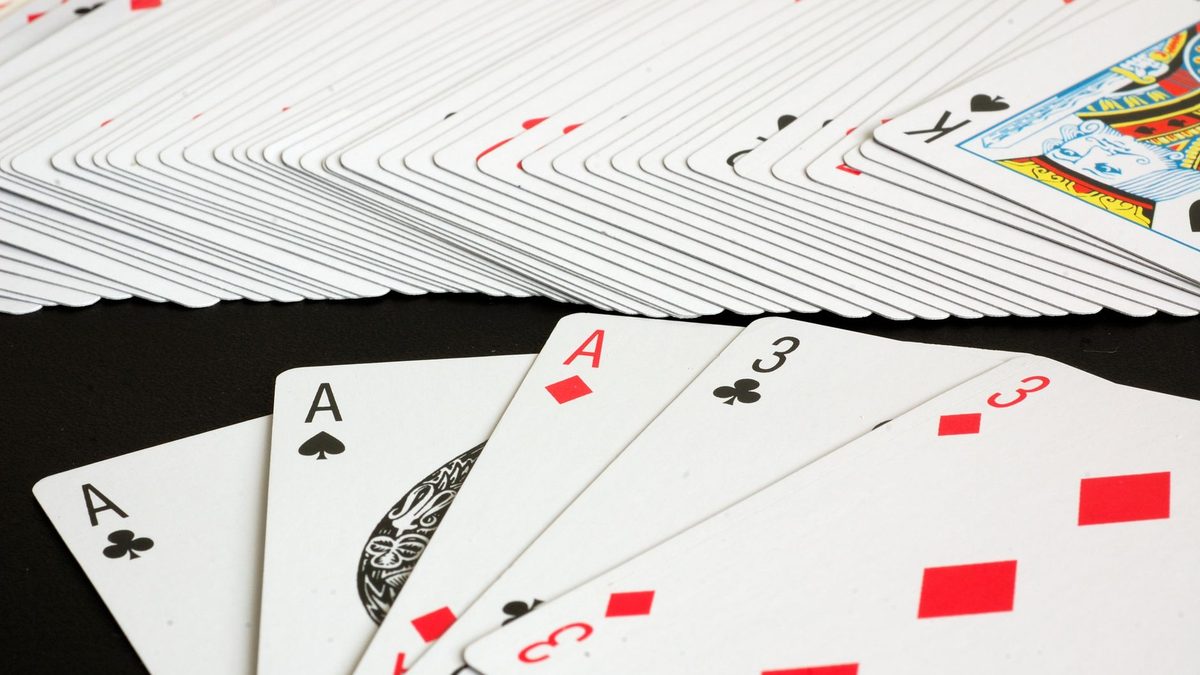
- Whist, simplified. Trick-taking without bidding — a genuine step up from about nine.
Matching the game to the age
| Game | Ages | Players | Length | Main demand |
|---|---|---|---|---|
| War | 4–7 | 2 | 10 min | None — pure luck |
| Snap | 4–8 | 2–4 | 5 min | Reaction speed |
| Go Fish | 5–9 | 2–5 | 10 min | Memory, holding a hand |
| Old Maid | 5–9 | 3–6 | 10 min | Early bluffing |
| Crazy Eights | 6–12 | 2–5 | 15 min | Simple planning |
| Sevens | 7–12 | 3–6 | 15 min | Blocking, sequencing |
| Rummy | 8–14 | 2–4 | 20–30 min | Real strategy |
| Whist | 9–14 | 4 | 30 min | Partnership play |
Swipe the table sideways to see every column.
Comprehensive rules for almost any card game are collected at Pagat, which is the closest thing the subject has to a reference work.
The problem nobody mentions
Holding a fan of cards is a fine motor skill, and under about six most children simply cannot do it.
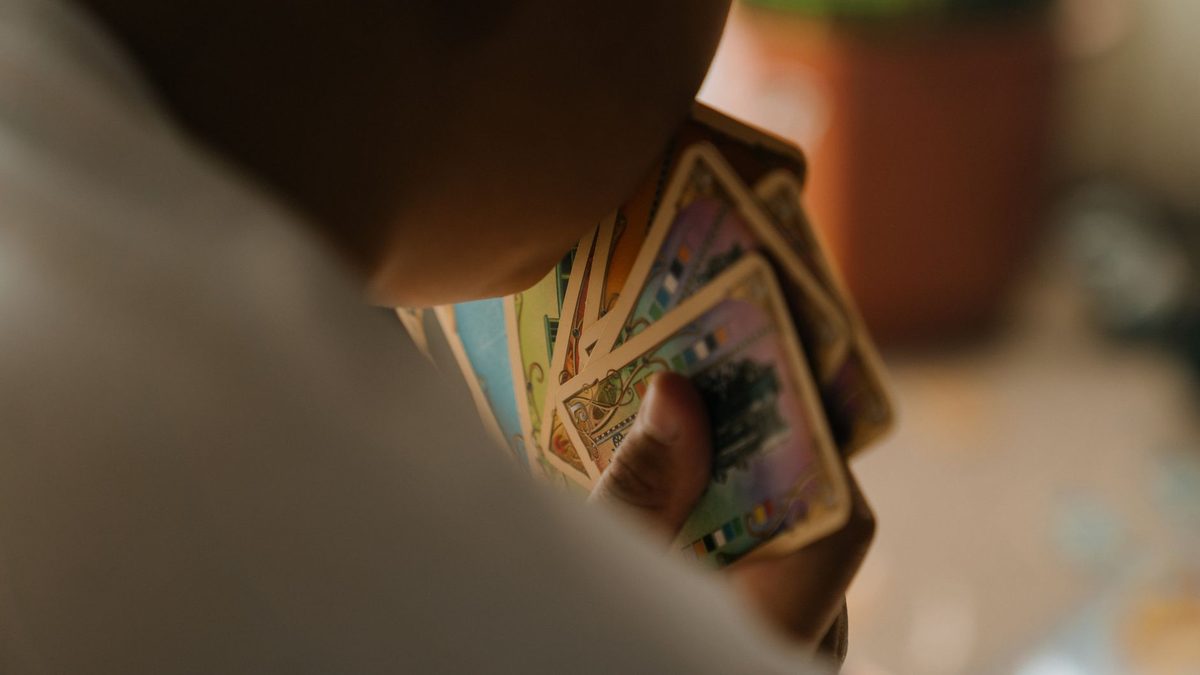
The result is a child who keeps dropping their hand, showing everyone their cards, and getting frustrated with a game they otherwise understand perfectly.
Three easy fixes: lay the hand face-up behind a book, use a card holder, or start with games where no hand is held at all. War and Snap avoid the problem entirely, which is part of why they suit the youngest players.
The underlying hand strength develops through the same play covered in pencil grip and handwriting — pinching, threading and squeezing rather than practice with cards.
Teaching a new game
Deal a practice hand face up and play it openly, talking through the choices. Explaining rules to a child holding hidden cards they cannot yet interpret is where most teaching attempts fail.
Shuffling matters more than you think
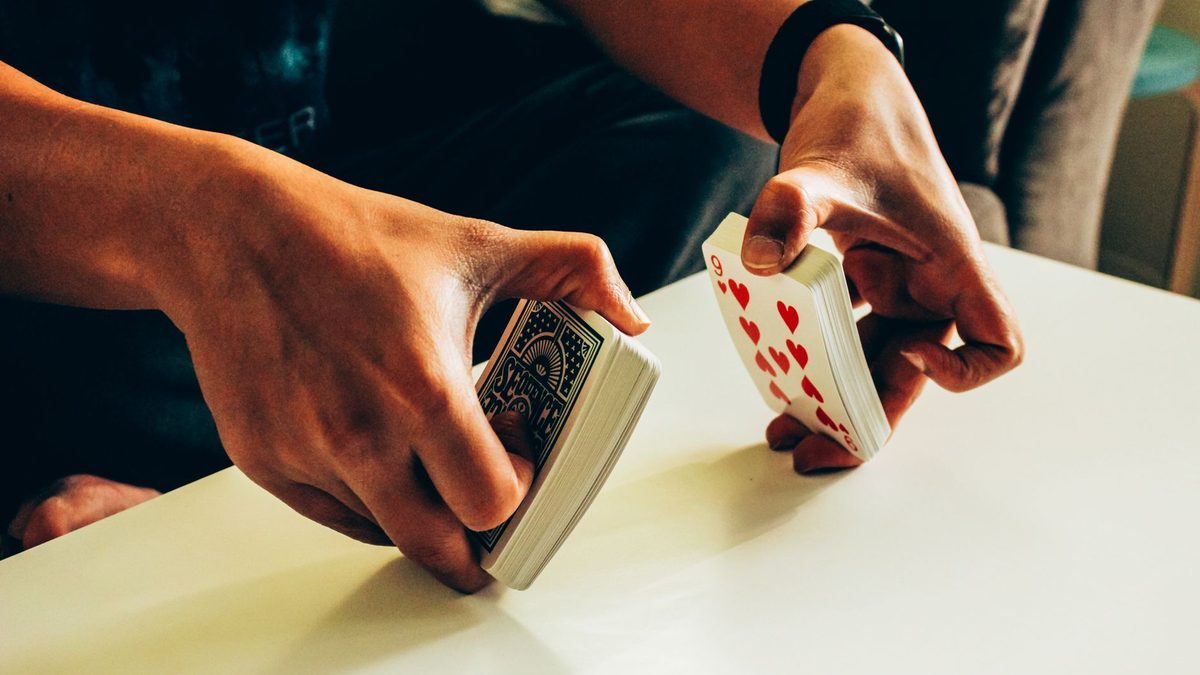
A deck collected after a game is heavily clumped, and one cursory shuffle does not fix it. Hands come out lopsided, someone gets four of a kind, and the game feels rigged.
Children cannot riffle shuffle, so teach the smoosh: spread the cards face down and swirl them around the table for ten seconds. It looks unserious and randomises better than most adult shuffles.
Two players, one deck
Most card games assume three or more. These work properly with exactly two, which is the common situation at home.
- War. Designed for two and needs nothing else.
- Rummy. Arguably better with two than with four.
- Beggar My Neighbour. No decisions at all, and strangely tense.
- Speed. Fast, simultaneous, and physically frantic.
Why cards travel better than dice
Keep a spare deck in the car. They cost almost nothing and one inevitably goes missing a card.
Cards stay put. A die that leaves a train table is gone under a seat for the rest of the journey, which is why dice games work better at home than in transit.
Cards do need a surface, though, so they lose to purely verbal games in a moving car — the ranking our guide to travel games for kids sets out. And for the smallest surface of all, games you can play with just a pencil need no table at all.
Frequently asked questions
What are the best card games for kids?
Start with War and Snap for ages four to seven, since neither requires holding a hand of cards. Go Fish and Old Maid suit five and up, Crazy Eights and Sevens from about six, and Rummy or Whist from eight or nine.
What age can children start playing card games?
Around four, provided the game does not require holding a fan of cards. That is a fine motor skill most children develop closer to six, so early games should keep cards face down or face up on the table instead.
How do you teach a child to shuffle?
Teach the smoosh rather than a riffle shuffle: spread the cards face down and swirl them around the table for about ten seconds. It requires no dexterity and randomises a clumped deck better than most casual adult shuffles.
What card games work with only two players?
War, Rummy, Beggar My Neighbour and Speed all work properly with exactly two. Rummy in particular is arguably better with two players than with four, since you can track far more of what your opponent is collecting.
Are card games good for children’s development?
Yes. They build number recognition, memory, sequencing, turn-taking and, in games with hidden information, early reasoning about what other people know. All of it happens through play rather than instruction.
Are cards or dice better for travelling?
Cards, generally. They stay where they are put, whereas a dropped die disappears under a seat for the rest of the journey. Cards still need a flat surface, so purely verbal games remain better in a moving car.