Playground Games from the 80s and 90s (With the Actual Rules)
The playground games of the 80s and 90s with their real rules — plus which still work today and which quietly disappeared.

Most articles about eighties and nineties playground games are lists of names. That is fine for nostalgia and useless if you actually want to teach one to a child who has never seen it.
These are the rules, as they were actually played, plus an honest note on which ones still work on a modern playground and which do not.
Key takeaways
- Almost none of these needed equipment beyond a ball, a rope or some chalk.
- The best of them self-organised — no adult was required to start or referee.
- Several are now discouraged or banned on safety grounds, and mostly for good reason.
- The ones that survived are those with no elimination and no physical contact.
- Rules varied wildly by school; there was never one correct version.
Ball games
Four Square
A large square is chalked on the ground and divided into four smaller squares, ranked from lowest to highest. One player stands in each.
The ball is served from the highest square and must bounce once in another player’s square. You are out if you miss, hit the line, or let it bounce twice. When someone goes out, everyone below moves up a rank and a new player enters at the bottom.

Four Square remains popular for a simple structural reason: being out lasts about ten seconds. Nobody sits on a bench for the rest of break, which is exactly why it outlived most of its contemporaries.
Wall Ball
Throw a ball against a wall; the next player must catch it before its second bounce. Miss and you either lose a life or, in the crueller versions, run to touch the wall while everyone throws the ball at you.
The punishment version is the reason many schools stopped it. The plain catching version survives in plenty of playgrounds and is perfectly reasonable.
Rope and clapping games
Skipping and Double Dutch
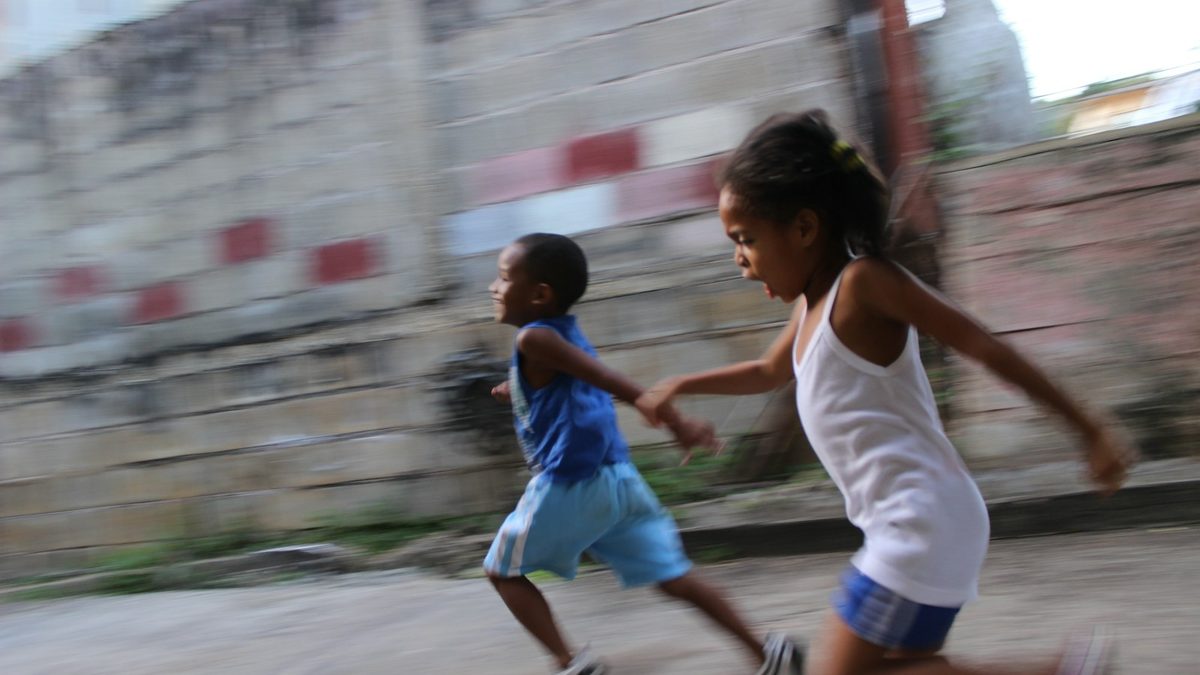
Two turners, one or two ropes, and a rhyme that dictates when the jumper enters and leaves. Double Dutch uses two ropes turning inwards in opposite rhythm and takes genuine practice.
Clapping games
Two players face each other and perform a fixed clap sequence in time with a chant, accelerating until somebody fumbles. Requires nothing at all, which is why versions of it exist in essentially every country.
Chalk and pocket games
Hopscotch
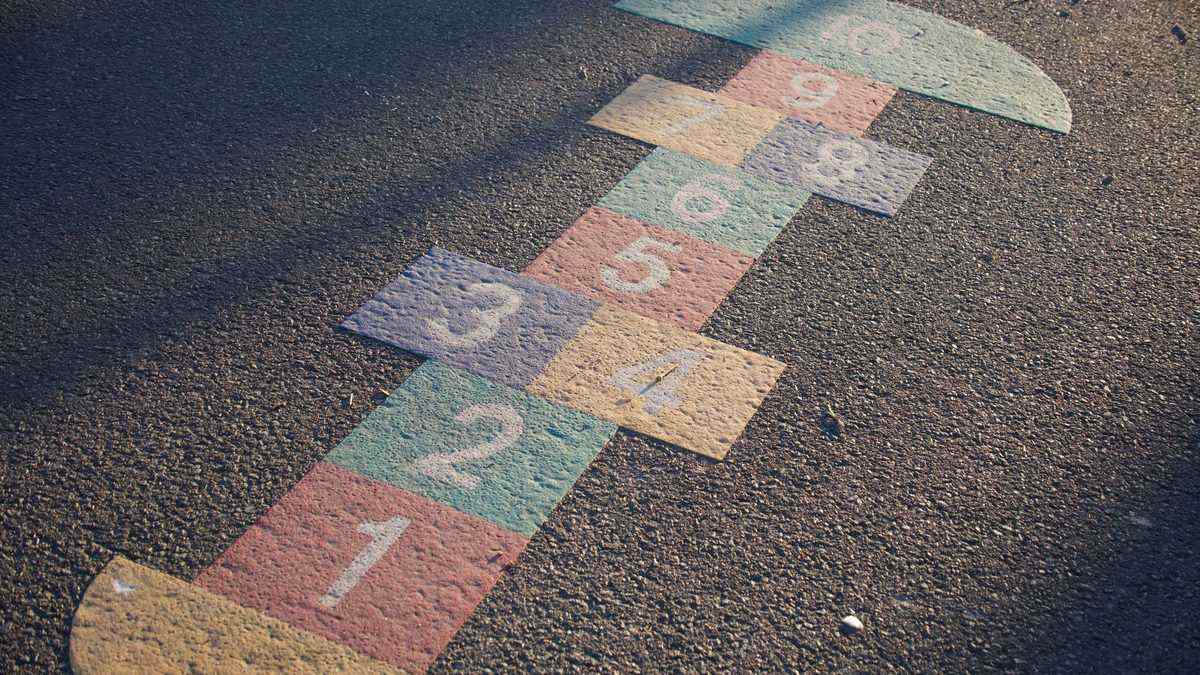
A numbered grid drawn in chalk. Throw a marker onto a numbered square, hop the course while skipping that square, collect the marker on the way back. Standing on a line or putting a second foot down ends your turn.
Marbles
Draw a circle, everyone contributes marbles to the middle, then take turns flicking a shooter to knock marbles out. Whatever you knock out, you keep.
Playing “for keeps” is what made it compelling and also what got it banned in a great many schools, since it is straightforwardly gambling.

Pencil fighting
The pocket game that needed no pocket, because everyone was already carrying the equipment. Two players took turns striking each other’s pencil until one snapped.
Full rules, regional names and the reasons it fell out of favour are in our guide to pencil fighting and how the playground classic actually worked.
Chasing games
- Tag. One chaser, everyone else runs. Endless local variants: stuck-in-the-mud, chain tag, shadow tag.
- British Bulldog. Runners cross between two lines while a catcher tries to stop them. Physical, and widely banned by the late nineties.
- Red Rover. Two linked lines, one player charges to break through. Also widely banned, for the same reason.
- What’s the Time, Mr Wolf? Creeping approach, sudden chase. Still played almost everywhere.

What survived, and why
The pattern is consistent. Games disappeared when they involved deliberate physical contact, when losing meant sitting out for a long time, or when they cost participants something real.
| Game | Equipment | Status today | Why |
|---|---|---|---|
| Tag | None | Thriving | No contact, instant re-entry |
| Hopscotch | Chalk | Thriving | Solo-friendly, zero risk |
| Four Square | Ball and chalk | Thriving | Being out lasts seconds |
| Clapping games | None | Thriving | Needs only two people |
| Skipping | Rope | Common | Needs turners and space |
| Wall Ball | Ball and wall | Restricted | The punishment variants |
| Marbles | Marbles | Rare | Playing for keeps is gambling |
| Pencil fighting | Two pencils | Rare | Destroys equipment, eye-injury risk |
| British Bulldog | None | Widely banned | Collisions and injuries |
Swipe the table sideways to see every column.
Teaching them to your own children
Three things make the difference between a game that catches on and one that gets politely tried once.
- Play it yourself first. Explaining a rule while playing is far easier than explaining it beforehand.
- Do not correct the variant. Children will change the rules within ten minutes. That is how these games survived in the first place.
- Pick one with fast re-entry. Anything where being out lasts more than a minute will die on the first round.

For the indoor equivalents, our guides to quiet indoor recess games and two-player pencil and paper games cover what works when there is no playground available. Children’s traditional games of this kind are documented at length in the folklife collections of the Library of Congress.
Frequently asked questions
What games did kids play on the playground in the 80s and 90s?
Tag and its variants, Four Square, Wall Ball, hopscotch, skipping and Double Dutch, clapping games, marbles, British Bulldog, Red Rover and pencil fighting. Almost all needed nothing more than a ball, a rope or a piece of chalk.
Why were games like British Bulldog banned?
Because they involve deliberate physical contact at speed, which produces collisions and injuries. Red Rover was restricted for the same reason. The games that survived are almost all non-contact with fast re-entry after being out.
How do you play Four Square?
Chalk a large square divided into four ranked smaller squares, with one player in each. The ball is served from the highest square and must bounce once in another player’s square. You are out if you miss, hit a line or let it bounce twice, and everyone below moves up a rank.
Why did marbles disappear from playgrounds?
Mainly because the compelling version was played “for keeps”, where knocked-out marbles were kept by the winner. That is effectively gambling between children, and many schools banned it on those grounds rather than for safety.
Are old playground games safe for children today?
Most are. Tag, hopscotch, Four Square and clapping games carry no unusual risk. The ones worth avoiding involve deliberate contact, such as British Bulldog and Red Rover, or destroy equipment and create fragments, such as pencil fighting.
Why do the rules vary so much between schools?
Because none of these games were ever written down. They were taught by demonstration and adapted by each group of children, so every school developed its own variant. There was never a single correct version of any of them.