Board Games for Kids: Why Most Get Played Twice
The structural reasons children's board games fail, what to look for at each age, and what to check before buying.
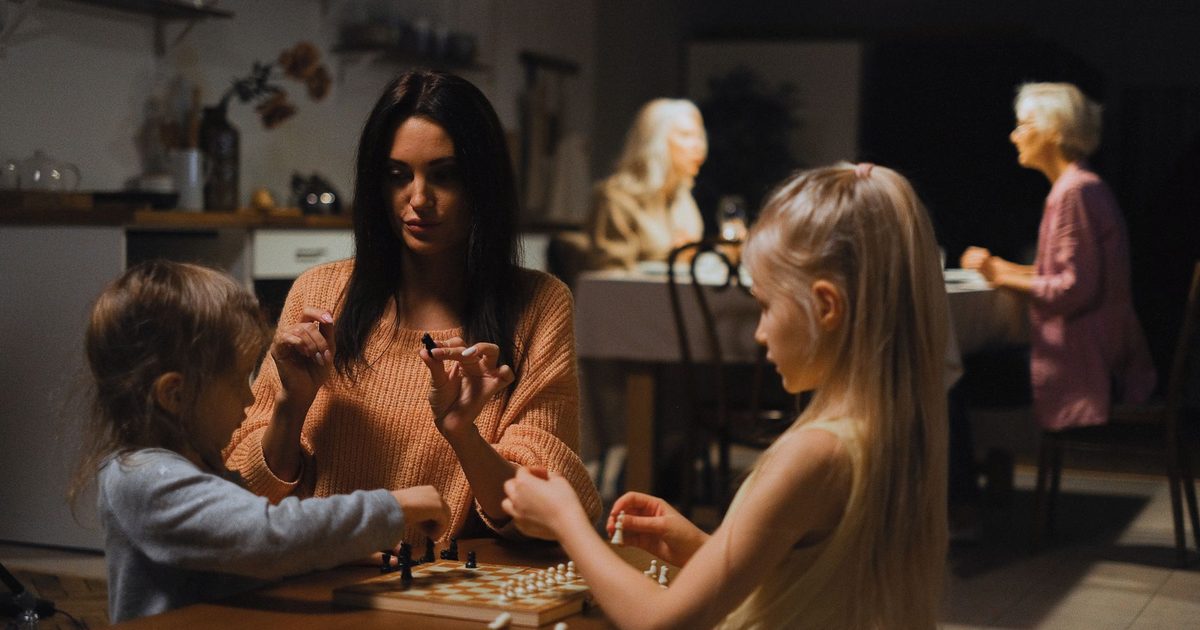
Most board games bought for children are played twice. The first time out of novelty, the second out of obligation, and then the box sits on a shelf being visible rather than useful.
The ones that survive share a few structural properties, and none of them is the theme on the lid.
Choosing board games for kids well is mostly a matter of reading the box for those properties instead of the age rating, which tells you very little.
Key takeaways
- Games die from elimination, length and setup — rarely from being too hard.
- Roll-and-move teaches turn-taking and nothing else. It is a stepping stone, not a destination.
- Cooperative games solve the losing problem entirely and suit mixed ages.
- Setup and pack-away time should be under a tenth of playing time.
- Small components are the reason half of these games become unplayable.
Why most children’s board games fail
Three structural problems account for nearly all of it, and you can spot every one before buying.
| Problem | What happens | Spot it by |
|---|---|---|
| Player elimination | First one out waits 40 minutes | “Last player standing wins” |
| Too long | Abandoned two-thirds through | Box says 60+ minutes |
| Heavy setup | Nobody suggests playing it | Many small components |
| No decisions | Adults refuse to replay it | Pure roll-and-move |
| Runaway leader | Outcome obvious at halfway | Winning grants more resources |
| Fiddly pieces | Unplayable once one is lost | Unique tiny parts |
Swipe the table sideways to see every column.
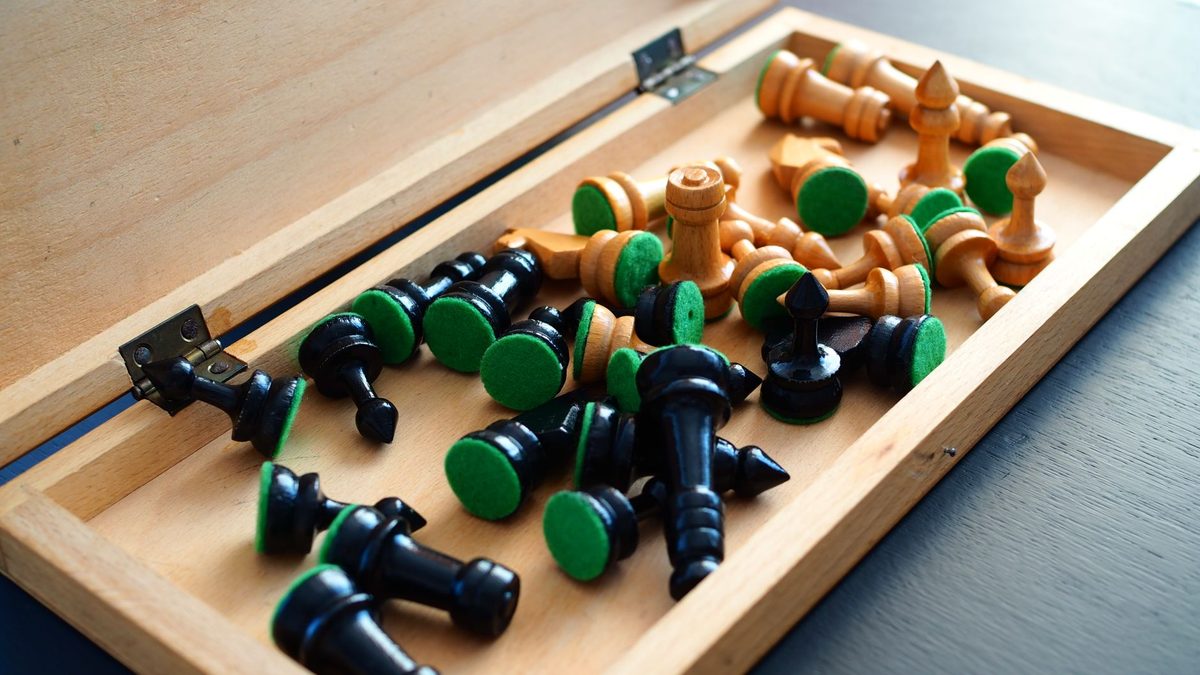
The elimination problem is the most damaging, and it is what makes several classic games far worse than their reputation suggests. A child knocked out early is not playing a game; they are watching one.
The runaway leader problem
Some games grant the leader more resources, which widens the gap every turn. By halfway the outcome is settled and everyone knows it, but the game continues anyway.
Good children’s games do the opposite, giving trailing players a small advantage so the result stays genuinely uncertain until near the end.
Roll-and-move: what it is for
Snakes and Ladders, and everything shaped like it. Roll a die, move that many spaces, react to whatever you land on.
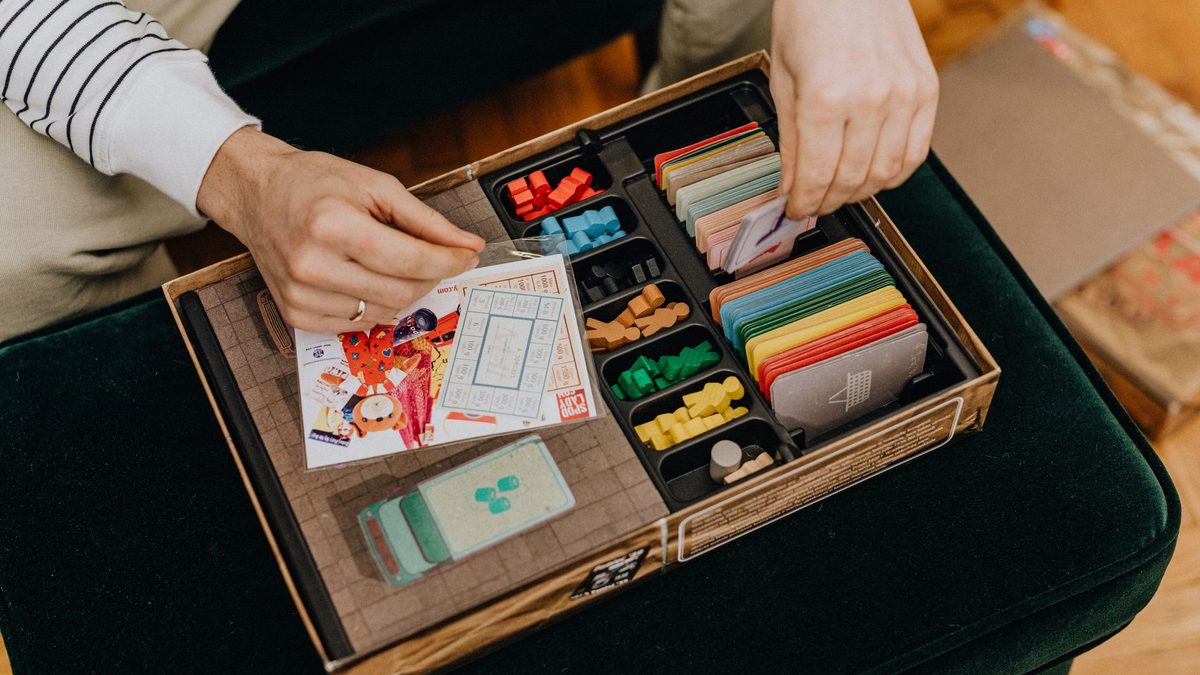
There are no decisions whatsoever, which makes these games genuinely valuable for three and four-year-olds learning to take turns, wait, count and lose without it mattering.
They stop being useful the moment those skills are in place. An eight-year-old playing Snakes and Ladders is doing arithmetic homework with a spinner attached.
Cooperative games
Everyone plays against the game rather than each other, which removes losing-to-a-sibling from the equation entirely.

They are unusually good across mixed ages, because an older child can contribute more without anyone being beaten. That is a different solution from the handicapping described in games for children of different ages, and often an easier one.
The one risk is the dominant player: without a rule preventing it, one confident child ends up directing everyone’s turns. Games that give each player private information handle this better.
Matching games to age
| Age | Look for | Avoid | Target length |
|---|---|---|---|
| 3–4 | Turn-taking, matching, colour | Reading, elimination | 10 min |
| 5–6 | Simple choices, memory | Long setup | 15 min |
| 7–8 | Real decisions, light strategy | Pure roll-and-move | 20–30 min |
| 9–11 | Hidden information, bluffing | Runaway leaders | 30–45 min |
| 12+ | Genuine strategy, negotiation | Anything childish in theme | 45–60 min |
Swipe the table sideways to see every column.
Note the “avoid” column at 7–8. That is the age where children notice that a game has no decisions in it, and they lose interest fast once they have.
Setup time is the hidden cost
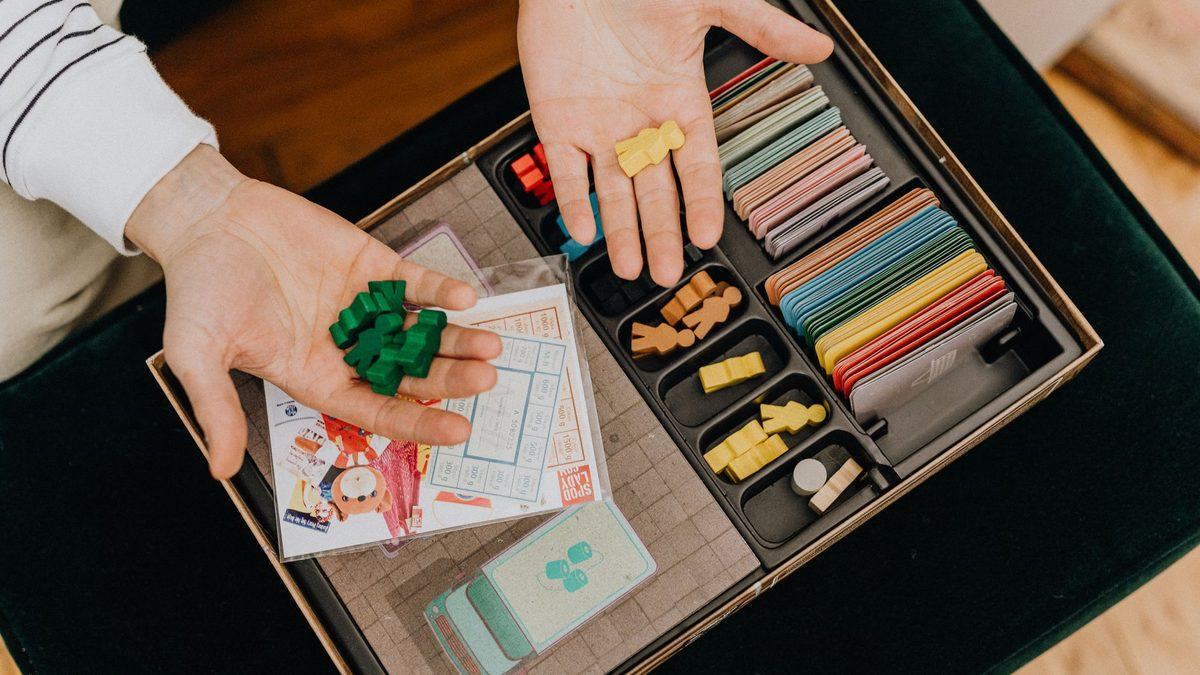
A game needing fifteen minutes of setup for twenty-five minutes of play will not get played on a weeknight, however good it is.
The rough test is whether setup and pack-away together stay under a tenth of the playing time. Games that fail it tend to come out twice a year, which is why the shelf-sitters are so often the elaborate ones.
This is also why card and dice games get played far more often than board games in practice — see card games for kids and dice games for kids, both of which set up in seconds.
How long a game should take

Box times are optimistic, and they assume everyone already knows the rules. Add half again for a first play, and more with young children.
Two twenty-minute games are almost always better than one forty-minute game. The loser gets an immediate rematch, and nobody has to sit through a conclusion they can already see coming.
Losing

Board games are where most children first meet losing repeatedly and publicly, and the game’s structure decides how hard that is.
- Short games make a loss two minutes old rather than forty.
- Hidden scoring keeps the result uncertain until the end.
- Chance gives a genuine reason the loss was not a verdict on them.
- Cooperative play removes the question entirely.
Museums such as The Strong National Museum of Play document how consistently these structural features appear in games that have lasted generations.
What to actually buy
- Check the elimination rule first. Before theme, before age rating.
- Halve the stated player count for young children. Waiting is the enemy.
- Prefer chunky components. Small parts get lost and end the game permanently.
- Buy shorter than you think. A twenty-minute game gets played fifty times.
And remember the comparison point: the games children play most are almost never the ones in boxes. They are the ones needing nothing at all, like the options in games you can play with just a pencil.
Frequently asked questions
What makes a good board game for kids?
No player elimination, a short playing time, quick setup, and at least one real decision per turn. Theme and age rating matter far less than these structural features, and all four can be checked before buying.
Why do children lose interest in board games?
Usually because of elimination, excessive length or heavy setup rather than difficulty. Around seven or eight children also start noticing that roll-and-move games contain no decisions, and lose interest once they have.
Are cooperative board games better for children?
Often, particularly across mixed ages, because everyone plays against the game and nobody has to lose to a sibling. The main risk is one confident child directing everyone’s turns, which games with private information handle better.
How long should a children’s board game take?
Around ten to fifteen minutes for under-sixes and twenty to thirty for primary-age children. Two short games generally beat one long one, since the loser gets an immediate rematch instead of sitting through a foregone conclusion.
Is Snakes and Ladders worth playing?
For three and four-year-olds, yes. It teaches turn-taking, waiting, counting and losing without consequence. It offers nothing to a child who already has those skills, which is why older children find it tedious.
How do you help a child who hates losing?
Choose games that are short, involve genuine chance, and hide the score until the end. A quick rematch does more than any consolation, and cooperative games remove the problem entirely while the child builds tolerance.